EPIC Advisory Board
Anita Allen [bio]
Ross Anderson [bio]
Jack Balkin [bio]
James Bamford [bio]
Ann Bartow [bio]
Rod Beckstrom [bio]
Colin Bennett [bio]
Francesca Bignami [bio]
Christine Borgman [bio]
danah boyd [bio]
Stefan Brands [bio]
Colleen Brown [bio]
Simone Browne [bio]
Kimberly Bryant [bio]
Joy Buolamwini [bio]
Ryan Calo [bio]
David Chaum [bio]
Mishi Choudhary [bio]
Danielle Citron [bio]
Julie Cohen [bio]
Whitfield Diffie [bio]
Laura Donohue [bio]
Cynthia Dwork [bio]
David Farber [bio]
Addison Fischer [bio]
David Flaherty [bio]
Philip Friedman [bio]
A. Michael Froomkin [bio]
Michele Bratcher Goodwin [bio]
Adrian Gropper [bio]
Marcia Hofmann [bio]
Rush Holt [bio]
Kristina Irion [bio]
Malavika Jayaram [bio]
Elizabeth Joh [bio]
Jeff Jonas [bio]
Brewster Kahle [bio]
Margot Kaminski [bio]
Jerry Kang [bio]
Len Kennedy [bio]
Michael Kirby [bio]
Lorraine Kisselburgh [bio]
Kate Klonick [bio]
Chris Larsen [bio]
Travis LeBlanc [bio]
Harry Lewis [bio]
Anna Lysyanskaya [bio]
Alice Marwick [bio]
Gary Marx [bio]
Aleecia Mcdonald [bio]
William McGeveran [bio]
Roger McNamee [bio]
Mary Minow [bio]
Jennifer Mnookin [bio]
Pablo G. Molina [bio]
Jumana Musa [bio]
Peter Neumann [bio]
Craig Newmark [bio]
Helen Nissenbaum [bio]
Frank Pasquale [bio]
Harriet Pearson [bio]
Deborah Peel [bio]
Stephanie Perrin [bio]
Dr. Bilyana Petkova [bio]
Priscilla Regan [bio]
Ronald L. Rivest [bio]
Pam Samuelson [bio]
Vivian Schiller [bio]
Bruce Schneier [bio]
Max Schrems [bio]
Katie Shilton [bio]
Barbara Simons [bio]
Scott Skinner-Thompson [bio]
Paul M. Smith [bio]
Amie Stepanovich [bio]
Jennifer Stoddart [bio]
Katherine Strandburg [bio]
Nadine Strossen [bio]
Latanya Sweeney [bio]
Sherry Turkle [bio]
Ed Viltz [bio]
Paul Vixie [bio]
Stephen Vladeck [bio]
David Vladeck [bio]
Ari Ezra Waldman [bio]
James Waldo [bio]
Anne L. Washington [bio]
Chris Wolf [bio]
EPIC Advisory Board
Alessandro Acquisti, Associate Professor, Information Technology and Public Policy
 Alessandro Acquisti is a Professor of Information Technology and Public Policy at the Heinz College, Carnegie Mellon University (CMU) and an Andrew Carnegie Fellow (inaugural class). He is the director of the Peex (Privacy Economics Experiments) lab at CMU and the co-director of CMU CBDR (Center for Behavioral and Decision Research). Alessandro investigates the economics of privacy. His studies have spearheaded the investigation of privacy and disclosure behavior in online social networks, and the application of behavioral economics to the study of privacy and information security decision making. Alessandro’s studies have been published in journals across several disciplines (including Science, Journal of Economic Literature, Proceedings of the National Academy of Science, Management Science, Journal of Consumer Research, Journal of Marketing Research, Marketing Science, Information Systems Research, Journal of Comparative Economics, ACM Transactions, and so forth), as well as edited books, conference proceedings, and numerous keynotes. Alessandro's findings have been featured in national and international media outlets, including the Economist, the New York Times, the Wall Street Journal, the Washington Post, the Financial Times, Wired.com, NPR, CNN, and 60 Minutes. His 2009 study on the predictability of Social Security numbers was featured in the “Year in Ideas” issue of the NYT Magazine (the SSNs assignment scheme was changed by the US Social Security Administration in 2011). Alessandro holds a PhD from UC Berkeley, and Master degrees from UC Berkeley, the London School of Economics, and Trinity College Dublin.
Anita Allen, Henry R. Silverman Professor of Law and Professor of Philosophy, University of Pennsylvania Law School
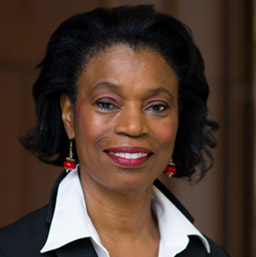 Anita L. Allen is an expert on privacy law, the philosophy of privacy, bioethics, and contemporary values, and is recognized for scholarship about legal philosophy, women’s rights, and race relations. She is a graduate of Harvard Law School and received her Ph.D. in Philosophy from the University of Michigan. She was the first African American woman to hold both a PhD in philosophy and a law degree. At Penn she is the Vice Provost for Faculty and the Henry R. Silverman Professor of Law and Professor of Philosophy. In 2010 she was appointed by President Obama to the Presidential Commission for the Study of Bioethical Issues. Her books include Unpopular Privacy: What Must We Hide (Oxford, 2011); The New Ethics: A Guided Tour of the 21st Century Moral Landscape (Miramax/Hyperion, 2004); Why Privacy Isn’t Everything: Feminist Reflections on Personal Accountability (Rowman and Littlefield, 2003); and Uneasy Access: Privacy for Women in a Free Society (Rowman and Littlefield, 1988), the first monograph on privacy written by an American philosopher. Her textbooks include: Privacy Law and Society (Thomson/West, 2016), the most comprehensive textbook on the US law of privacy and data protection on the market, with chapters on the common law, constitutional law, federal statutory law, surveillance law and international standards. Allen, who has publlshed more than a hundred scholarly articles, book chapters and essays, has also contributed to popular magazines, newspapers and blogs, and has frequently appeared on nationally broadcast television and radio programs. Allen is active as a member of editorial, advisory, and charity boards, and in professional organizations relating to her expertise in law, philosophy and health care.
Ross Anderson, Professor of Security Engineering, Cambridge University
 Ross Anderson is Professor of Security Engineering at Cambridge University. He was one of the founders of a vigorously-growing new academic discipline, the economics of information security. Ross was also a seminal contributor to the idea of peer-to-peer systems and an inventor of the AES finalist encryption algorithm "Serpent". He also has well-known publications on many other technical security topics ranging from hardware tamper-resistance through emission security to the protection of payment systems, utility metering and medical records. He is a Fellow of the Royal Society, the Royal Academy of Engineering, the IET and the IMA. He also wrote the standard textbook "Security Engineering - a Guide to Building Dependable Distributed Systems". He also chairs the Foundation for Information Policy Research, the UK's leading Internet policy think-tank.
Jack Balkin, Knight Professor of Constitutional Law, Yale Law School
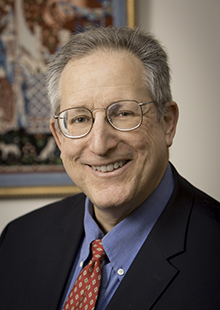 Jack M. Balkin is Knight Professor of Constitutional Law and the First Amendment at Yale Law School. He is the founder and director of Yale's Information Society Project, an interdisciplinary center that studies law and new information technologies. He also directs the Abrams Institute for Freedom of Expression, and the Knight Law and Media Program at Yale.
Professor Balkin is a member of the American Academy of Arts and Sciences and the author of over a hundred articles in different fields, including constitutional theory, Internet law, freedom of speech, reproductive rights, jurisprudence, and the theory of ideology. He founded and edits the group blog Balkinization, and has written widely on legal issues for such publications as the New York Times, the New England Journal of Medicine, the American Prospect, the Atlantic Online, Washington Monthly, the New Republic Online, and Slate. His books include Living Originalism; Constitutional Redemption: Political Faith in an Unjust World; The Constitution in 2020 (with Reva Siegel); Processes of Constitutional Decisionmaking (5th ed. with Brest, Levinson, Amar, and Siegel); Cultural Software: A Theory of Ideology; The Laws of Change: I Ching and the Philosophy of Life; What Brown v. Board of Education Should Have Said; and What Roe v. Wade Should Have Said.
James Bamford, Author and Journalist
 James Bamford is an American bestselling author, journalist, and PBS documentary producer. He is widely noted for his writing about the United States intelligence agencies, especially the highly secretive National Security Agency. The New York Times has called him "the nation's premier journalist on the subject of the National Security Agency." And in a lengthy profile, The New Yorker referred to him as "the NSA's chief chronicler." His most recent book, The Shadow Factory: The Ultra-Secret NSA From 9/11 to The Eavesdropping on America, became a New York Times bestseller and was named by The Washington Post as one of "The Best Books of the Year." It is the third in a trilogy by Mr. Bamford on the NSA, following The Puzzle Palace (1982) and Body of Secrets (2001), also New York Times bestsellers.
In September 2014 he wrote a cover story for Wired magazine based on his three days in Moscow with fugitive NSA whistleblower Edward Snowden. In addition, he has been a columnist for Foreign Policy Magazine and has written for the New York Review of Books, New York Times Magazine, The Atlantic, Harpers, Rolling Stone, and many other publications. In 2006, he won the National Magazine Award for Reporting, the highest honor in the magazine industry, for his writing in Rolling Stone on the war in Iraq. Throughout the 1990s, Mr. Bamford served as the Washington Investigative Producer for ABC's World News Tonight with Peter Jennings where he won a number of journalism awards for his coverage of national security issues. Mr. Bamford holds a Juris Doctor degree, was awarded a Polymer fellowship at Yale Law School, and taught at the University of California, Berkeley’s Goldman School of Public Policy as a distinguished visiting professor.
Ann Bartow, Professor, Pace Law School
 Professor Ann Bartow joined the Pace Law School faculty in 2011 from the University of South Carolina School of Law. During the 2011-2012 academic year, Professor Bartow was a Fulbright Scholar at Tongji University in Shanghai, China. She teaches Copyright Law, Trademark Law, Survey of Intellectual Property Law, Art Law and Torts. She is a graduate of Cornell University and the University of Pennsylvania Law School. Her scholarship focuses on the intersection between intellectual property laws and public policy concerns, privacy and technology law, and feminist legal theory, and she has published numerous articles and book chapters on these subjects.
 Rod Beckstrom is a well-known cybersecurity authority, Internet leader and expert on organizational leadership. He is the former President and CEO of ICANN, the founding Director of the U.S. National Cybersecurity Center and co-author of the best-selling book The Starfish and the Spider: The Unstoppable Power of Leaderless Organizations. He is a frequent international media commentator and public speaker. Rod currently serves as an advisor to multinational companies, governments and international institutions, including serving as Chief Security Advisor to Samsung SSIC. He is Chairman of the Global Council on the Future of the Internet at the Switzerland-based World Economic Forum and is an Honorary Professor of International Law at China?s Beijing Normal University. Rod graduated from Stanford University with a BA with Honors and Distinction, and in 1987 earned an MBA. He served as Chairman of the Council of Presidents of the Associated Students of Stanford University and was a Fulbright Scholar in economics at the University of St. Gallen, Switzerland.
Colin Bennett, Professor, University of Victoria
 Colin Bennett received his Bachelor's and Master's degrees from the University of Wales, and his Ph.D from the University of Illinois at Urbana-Champaign. Since 1986 he has taught in the Department of Political Science at the University of Victoria, where he is now Professor. He has enjoyed Visiting Professorships at Harvard’s Kennedy School of Government, the Center for the Study of Law and Society at University of California, Berkeley, the School of Law, University of New South Wales, the Law, Science, Technology and Society Centre at the Vrije Universiteit in Brussels and at the University of Toronto.
His research has focused on the comparative analysis of surveillance technologies and privacy protection policies at the domestic and international levels. In addition to numerous scholarly and newspaper articles, he has written or edited seven books, including The Governance of Privacy (MIT Press, 2006, with Charles Raab) and The Privacy Advocates: Resisting the Spread of Surveillance (MIT Press, 2008), and policy reports on privacy protection for Canadian and international agencies. He was co-investigator of a large Major Collaborative Research Initiative grant entitled "The New Transparency: Surveillance and Social Sorting" which culminated in the report: Transparent Lives: Surveillance in Canada. Through a new SSHRC Partnership Grant on "Big Data Surveillance", he is currently researching the capture and use of personal data by political parties in Western democracies.
Francesca Bignami, Professor, George Washington University Law School
 Professor Bignami teaches European Union law, administrative law, and comparative public law. Her research focuses on problems of legitimacy and accountability in the European Union and other systems of international governance as well as the role of non-state actors in such organizations. Before coming to Duke, she was in private practice in Washington, D.C., specializing in international trade.
After receiving her A.B. magna cum laude from Harvard College and her M.Sc. from Oxford University, Professor Bignami served for one year in the European Commission in Brussels where she worked on Community research and development policy. In 1996, she graduated from Yale Law School, where she was an editor of the Yale Law Journal. She clerked for Judge Stephen F. Williams, U.S. Court of Appeals, D.C. Circuit, and then served as a stagiare for Advocate General Philippe L_ger of the European Court of Justice in Luxembourg. In 1998, she was a Fulbright Scholar at the European University Institute in Florence, Italy.
Christine Borgman, Distinguished Professor and Presidential Chair, UCLA Department of Information Studies
 Christine L. Borgman is Distinguished Professor and Presidential Chair in Information Studies at UCLA. She is the author of more than 250 publications in the fields of information studies, computer science, and communication. In 2017, she gave the Tenth Annual Privacy Lecture for the Berkeley Center for Law and Technology, which will appear as Open Data, Grey Data, and Stewardship: Universities at the Privacy Frontier, which will appear in the Berkeley Technology Law Journal, 33:2 (2018). Her most recent monograph, "Big Data, Little Data, No Data: Scholarship in the Networked World" (MIT Press, 2015), won the PROSE Award from the American Association of Publishers for best book in Computing and Information Sciences. Her two previous MIT Press monographs, "Scholarship in the Digital Age: Information, Infrastructure, and the Internet" (2007) and "From Gutenberg to the Global Information Infrastructure: Access to Information in a Networked World" (2000), each won the Best Information Science Book of the Year award from the American Society for Information Science and Technology. She directs the Center for Knowledge Infrastructures at UCLA, where she conducts research on data practices and policy with funding from the Alfred P. Sloan Foundation, National Science Foundation, and other sources. She is a Fellow of the American Association for the Advancement of Science, a Fellow of the Association for Computing Machinery, a member of the Board of Directors of the Electronic Privacy Information Center, of advisory boards to the Library of Congress, Harvard University Libraries, the Inter-University Consortium for Political and Social Research, and other bodies. In the University of California, she serves on several boards on academic computing, communications, privacy, and data governance.
danah boyd, Founder, Data & Society
 danah boyd is a Partner Researcher at Microsoft Research, the founder/president of Data & Society, and a Visiting Professor at New York University. Her research is focused on examining and addressing inequities in society connected to sociotechnical systems. Her current work is focused on interrogating what makes data legitimate, with an eye to the US census. Her book on youth practices - "It's Complicated: The Social Lives of Networked Teens" - has received widespread praise from scholars, parents, and journalists. Dr. boyd received a bachelor's degree in computer science from Brown University, a master's degree in sociable media from MIT Media Lab, and a PhD from the School of Information at the University of California-Berkeley. She currently serves on the boards of Crisis Text Line and the Social Science Research Council.
Stefan Brands, Founder, Credentica
 Stefan Brands was the founder and CEO of Credentica, a firm specializing in encryption and cryptographic software. There, he helped develop the U-Prove cryptographic technology. Credentica was taken over by Microsoft in early 2008. He and other key colleagues joined Microsoft and have been continuing their work with cryptographic software and U-Prove since then. Mr. Brands is also Adjunct Professor of Computer Science at McGill University, Canada and the author of "Rethinking Public Key Infrastructures and Digital Certificates; Building in Privacy."
Colleen Brown, Partner, Sidley Austin LLP
 Colleen Theresa Brown is a partner at Sidley Austin LLP where she focuses on privacy, cybersecurity, data protection and emerging technology issues for a diverse group of companies, including those in the financial, life sciences, telecommunications, media, retail, technology and manufacturing sectors. Her counseling experience includes cyber risk and data breach management, corporate data protection and privacy compliance programs, international data protection and cross-border transfer, Big Data, Internet of Things, electronic surveillance, trade secrets, social media, cloud computing and online brand protection. In addition to counseling and litigation related to data protection, her work also includes counseling and negotiation of data-driven agreements, as well as privacy and cybersecurity diligence and integration planning for mergers and acquisitions. Colleen also advises civil rights and equality organizations through pro bono representations regarding complex constitutional and other privacy, data protection and cybersecurity issues. At Sidley, Colleen co-founded Women in Privacy®, a networking group for women working as in-house counsel, compliance officers and other professionals in the field of privacy. Women in Privacy® holds regular meetings in the U.S. and the EU and is dedicated to thought leadership for women privacy professionals. She is also a frequent speaker, writer, and commenter on privacy and cybersecurity legal developments and the chief editor of the Sidley Blog Data Matters.
Colleen was named by Washingtonian magazine among its "Top Lawyers" for Cybersecurity in 2019. Colleen is a Certified Information Privacy Professional/United States through the International Association of Privacy Professionals. She earned her J.D. at the University of Pennsylvania Law School, and her Bachelor of Arts from Loyola University Maryland.
Simone Browne, Associate Professor of Black Studies, University of Texas at Austin
 Simone Browne is Associate Professor of Black Studies and Research Director of Critical Surveillance Inquiry with Good Systems, at the University of Texas at Austin. She is currently writing her second book manuscript, "Like the Mixture of Charcoal and Darkness," which examines the interventions made by artists whose works grapple with the surveillance of Black life, from policing, privacy, smart dust and the FBI's COINTELPRO to encryption, electronic waste and artificial intelligence. Together, these essays explore the productive possibilities of creative innovation when it comes to troubling surveillance and its various tactics, and imagining Black life beyond the surveillance state. Simone is the author of "Dark Matters: On the Surveillance of Blackness."
Kimberly Bryant, Founder, Black Girls Code
 Kimberly Bryant is the founder of Black Girls Code. Founded in 2011, Black Girls Code is a nonprofit organization designed to introduce women of color to programming and technology and to foster them in these fields at an early age. She is a Biotechology/Manufacturing/Engineering/ and Supply Chain professional with over 10 years experience in Facilities /Operations/Maintenance and Project Management with companies in the pharmaceutical, biotechnology, chemical, and consumer products industries. She has expert skills in both team building and collaborative leadership with a unique ability to synthesize ideas across a wide spectrum of perspectives and develop a concise shared vision to drive organizational change and improvements in complex business processes. Kimberly majored in Electrical Engineering with a minor in Computer Science (CS) at Vanderbilt University.
Joy Buolamwini, Founder, Algorithmic Justice League
 Joy Buolamwini is a computer scientist and poet of code who uses art and research to illuminate the social implications of artificial intelligence. She founded the Algorithmic Justice League to create a world with more equitable and accountable technology. Her TED Featured Talk on algorithmic bias has over 1 million views. Her MIT thesis methodology uncovered large racial and gender bias in AI services from companies like Microsoft, IBM, and Amazon. In addition to advising elected officials during US congressional hearings, she serves on the Global Tech Panel to advise world leaders and executives on reducing AI harms.
Joy’s journey is depicted in the feature-length documentary Coded Bias which sheds lights on threats A.I. poses to civil rights and democracy. Her spoken word visual audit "AI, Ain't I A Woman?" which shows AI failures on the faces of iconic women like Serena Williams, Oprah Winfrey, and Michelle Obama has been part of exhibitions ranging from Ars Electronica to the Barbican Centre, UK. A Rhodes Scholar and Fulbright Fellow, Joy has been named to notable lists including the Bloomberg50, Forbes Top 50 Women in Tech, and Fortune Magazine named her "the conscience of the AI revolution". She holds graduate degrees from Oxford University and MIT; and a bachelor's from the Georgia Institute of Technology. As a former pole vaulter, she still holds Olympic aspirations if not realities.
Ryan Calo, Associate Professor, University of Washington School of Law
 Ryan Calo is an associate professor at the University of Washington School of Law. Professor Calo's research on law and emerging technology appears or is forthcoming in leading law reviews (California Law Review, University of Chicago Law Review, Stanford Law Review Online, University of Pennsylvania Law Review Online) and technical publications (MIT Press, IEEE, Science, Artificial Intelligence), and is frequently referenced by the mainstream media (NPR, New York Times, Wall Street Journal). Professor Calo has testified before the full Judiciary Committee of the United States Senate and the German Parliament and has organized events on behalf of the National Science Foundation, the Department of Homeland Security, and the White House. He has been a speaker at the Aspen Ideas Festival and NPR's Weekend in Washington. Business Insider named him one of the most influential people in robotics. Calo received his JD cum laude from the University of Michigan Law School, where he was a contributing editor to the Michigan Law Review and symposium editor of the Journal of Law Reform, and his BA in Philosophy from Dartmouth College. In 2005-2006, he served as a law clerk to the Honorable R. Guy Cole Jr. of the United States Court of Appeals for the Sixth Circuit. Calo was previously an associate in the D.C. office of Covington & Burling, LLP, where he advised companies on issues of data security, privacy, and telecommunications. Prior to law school, Calo was an investigator of allegations of police misconduct in New York City.
David Chaum, CEO/Founder, Elixxir
 Widely recognized as the inventor of digital cash, David is currently leading the Elixxir project to provide scalable digital sovereignty. He is also known for other fundamental innovations in cryptography, including privacy technology and secure election systems. With a PhD in Computer Science from UC Berkeley, he taught at NYU Graduate School of Business and the University of California, led a number of breakthrough projects as well as founded the International Association for Cryptologic Research, the cryptography group at the Center for Mathematics and Computer Science in Amsterdam, DigiCash, the Voting Systems Institute, and the Perspectiva Fund.
Mishi Choudhary, Legal Director, Software Freedom Law Center
 Mishi Choudhary is a technology lawyer, licensed to practice in New York and India with over a decade of experience in the area of intellectual property rights, Open Source licensing, e- commerce, privacy, surveillance, platform liability and user free expression. She has been involved in a number of court cases and other efforts around protection of online free speech and expression; privacy; surveillance and software patents in India. She is the Founding Executive Director of SFLC.in, India, a legal services organization based out of New Delhi that brings together lawyers, policy analysts, technologists, and students to protect freedom in the digital world. At SFLC.in, she focuses her work on promotion of innovation and open access to knowledge by helping developers make great Free and Open Source Software, protect privacy and civil liberties for citizens in the digital world, educate policy makers to reach informed decisions on the use and adoption of technology. She is also the Legal Director at Software Freedom Law Center, New York that provides pro-bono legal services to developers of Free, Libre, and Open Source Software. Mishi has a Masters degree in Law from Columbia University in the City of New York, a Legum Baccalaureus (LL.B.) degree with Honors and a Bachelors degree in Political Science from the University of Delhi.
Danielle Citron, Professor of Law, Boston University School of Law
 Danielle Citron is a professor of law at the Boston University School of Law, where she teaches and writes about information privacy, free expression, and civil rights. Professor Citron has garnered awards nationally and internationally. She was named a MacArthur Fellow in 2019 based on her work on cyber stalking and sexual privacy. In 2015, the United Kingdom’s Prospect magazine named Professor Citron one of the “Top 50 World Thinkers.” The Maryland Daily Record named her one of the “Top 50 Most Influential Marylanders” of 2015.
Professor Citron has advised federal and state legislators, law enforcement, and international lawmakers on privacy issues. In 2019, she testified before the House Intelligence Committee on the national security challenges of deep fakes and other forms of disinformation as well as before the House Energy and Commerce Committee on the responsibility of online platforms. In April 2015, she testified at a congressional briefing sponsored by Congresswoman Katharine Clark on the First Amendment implications of a federal cyber stalking legal agenda. She has advised the offices of Congresswoman Katharine Clark, Congresswoman Jackie Speier, Senator Diane Feinstein, Senator Elizabeth Warren, and Senator Kamala Harris on potential federal legislation. Professor Citron helped Maryland State Senator Jon Cardin draft a bill criminalizing the nonconsensual publication of nude images, which was passed into law in 2014.
Before joining BU Law, she taught at the University of Maryland School of Law where she received the 2018 “UMD Champion of Excellence” award for teaching and scholarship. She has been a visiting professor at Fordham Law School and George Washington Law School. In 2016, she was a Dean’s Distinguished Visitor at Washington University School of Law and an interdisciplinary studies fellow at the University of Massachusetts at Amherst. Professor Citron will visit University of Chicago School of Law in 2021 and at Harvard Law School in the fall of 2022.
Julie Cohen, Professor, Georgetown University Law Center
 Professor Cohen teaches and writes about intellectual property law and data privacy law, with particular focus on computer software and digital works and on the intersection of copyright, privacy, and the First Amendment in cyberspace. She is co-author of Copyright in a Global Information Economy (Aspen Law & Business 2002), and is a member of the Advisory Boards of the Electronic Privacy Information Center and Public Knowledge. Following law school, Professor Cohen clerked for the Honorable Stephen Reinhardt of the U.S. Court of Appeals for the Ninth Circuit, and then practiced with the San Francisco firm of McCutchen, Doyle, Brown & Enersen, where she specialized in intellectual property litigation. Prior to joining the Law Center Faculty in 1999, Professor Cohen was Assistant Professor of Law at the University of Pittsburgh School of Law.
Whitfield Diffie, Vice President and Fellow, Chief Security Officer (retired), Sun Microsystems
 Whitfield Diffie is best known for his 1975 discovery of the concept of public key cryptography, which he developed along with Stanford University Electrical Engineering Professor Martin Hellman. Public key cryptography, which revolutionized not only cryptography but also the cryptographic community, now underlies the security of internet commerce.
During the 1980s, Diffie served as manager of secure systems research at Northern Telecom. In 1991, he joined Sun Microsystems as distinguished engineer and remained as Sun fellow and chief security officer until the spring of 2009. From 2009 to 2012 Diffie served as a Visiting Scholar and Affiliate at Stanford University, and then became a Consulting Scholar for Stanford’s Center for International Security and Cooperation.
Diffie spent the 1990s working to protect the individual and business right to use encryption, for which he argues in the book Privacy on the Line, the Politics of Wiretapping and Encryption, which he wrote jointly with Susan Landau. Diffie is a Marconi fellow and the recipient of a number of awards including the National Computer Systems Security Award (given jointly by NIST and NSA) and the Franklin Institute's Levy Prize.
Diffie received a Bachelor of Science degree in mathematics from the Massachusetts Institute of Technology in 1965, and was awarded a Doctorate in Technical Sciences (Honoris Causa) by the Swiss Federal Institute of Technology in 1992. Among his many honors and awards he was the recipient of the Golden Jubilee Award for Technological Innovation from the IEEE Information Theory Society in 1998, co-recipient (with Hellman and Merkle) of the IEEE Richard W. Hamming Medal in 2010, and recipient of the A.M. Turing Award in 2015.
Laura Donohue, Professor, Georgetown University Law Center
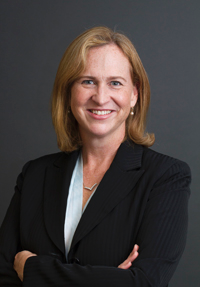 Laura K. Donohue is a Professor of Law at Georgetown Law, Director of Georgetown's Center on National Security and the Law, and Director of the Center on Privacy and Technology. Professor Donohue writes on U.S. Constitutional Law, American and British legal history, and national security and counterterrorist law in the United States and United Kingdom. She is currently working on The Future of Foreign Intelligence (Oxford University Press, 2015), focusing on the Fourth Amendment and surveillance in a digital world. Prior to this, The Cost of Counterterrorism: Power, Politics, and Liberty (Cambridge University Press, 2008) looked at the impact of American and British counterterrorist law on life, liberty, property, privacy, and free speech, while Counterterrorist Law and Emergency Law in the United Kingdom 1922-2000 (Irish Academic Press, 2007) concentrated on measures introduced to address violence in Northern Ireland. Her articles have examined, inter alia, the doctrine of state secrets; the advent of remote biometric identification; Executive Order 12,333 and the Foreign Intelligence Surveillance Act; extended detention and interrogation; terrorist trials; antiterrorist finance and material support; synthetic biology, pandemic disease, and biological weapons; scientific speech; and the history of quarantine law. Professor Donohue obtained her AB in Philosophy (with Honors) from Dartmouth College, her MA in Peace Studies (with Distinction) from the University of Ulster, Northern Ireland, her JD (with Distinction) from Stanford Law School, and her PhD in History from the University of Cambridge, England.
Cynthia Dwork, Microsoft Research
 Cynthia Dwork is a Distinguished Scientist at Microsoft Research whose work includes private data analysis, cryptography, combating spam, complexity theory, web search, voting theory, distributed computing, interconnection networks, and algorithm design.
David Farber, Carnegie Mellon, Department of Computer Science
 Prof. Farber is Distinguished Career Professor of Computer Science and Public Policy in the School of Computer Science at Carnegie Mellon University holding secondary appointments in the Heinz School of Public Policy and the Engineering Public Policy Group. He recently (2003) retired as the Alfred Fitler Moore Professor of Telecommunication Systems at the University of Pennsylvania where he also held appointments as Professor of Business and Public Policy at the Wharton School of Business and as a Faculty Associate of the Annenberg School of Communications.
In January 17, 2000, he was appointed to be Chief Technologist at the US Federal Communications Commission while on leave from UPenn for one year ending in early June 2001. While at UPenn, he co-directed The Penn Initiative on Markets, Technology and Policy. He was also Director of the Distributed Systems Laboratory (DSL) where he managed leading edge research in Ultra High Speed Networking. Research papers of the DSL are available in its electronic library.
His early academic research work was focused at creating the worlds first operational Distributed Computer System (DCS) while at the ICS Department at the University of California at Irvine. After that, while with the Electrical Engineering Department of the University of Delaware, he helped conceive and organize CSNet, NSFNet and the NREN. He was a member of the Board of Trustees of the Internet Society as well as having serving 10 years on the National Research Council's Computer Science and Telecommunications Board (CSTB).
He was named in the 1997 edition of the UPSIDE's Elite 100, as one of the Visionaries of the field and was named in the 1999 Network World as one of the 25 most powerful people in Networking. In 2002 he was named by Business Week as one of the top 25 leaders in E-Commerce. His industrial experiences are extensive, just as he entered the academic world; he co-founded Caine, Farber & Gordon Inc. (CFG Inc.) which became one of the leading suppliers of software design methodology. His consulting activities include Intel, the RAND Corp among others. He is also on a number of industrial advisory and management boards.
Addison Fischer, Fischer International Corporation
 Addison Fischer founded Fischer International Systems in 1982 and continues to serve as its chairman. He graduated from West Virginia University with a B.S. and M.S. in mathematics. He became a chief investor in RSA Data Security, Inc. in the 1980s and served as a board member until 1996.
Currently, Mr. Fischer serves as chairman of SmartDisk Corp., a spinoff of Fischer International Systems, in addition to his chairmanship at Fischer International. He is also on the board of Surety Technologies and Xcert International.
David Flaherty, former Information and Privacy Commissioner British Columbia
 David Flaherty is a specialist in the management of privacy and information policy issues. He served a six-year, non-renewable term as the first Information and Privacy Commissioner for the Province of British Columbia (1993-99). He built an office of 25 staff with an enviable record for successful mediation of access to information disputes. Flaherty wrote 320 Orders under the Freedom of Information and Protection of Privacy Act. He also pioneered the development of site visits to public bodies (hospitals in particular) as a form of auditing for compliance with fair information practices.
Flaherty began his involvement with privacy issues as an assistant to Alan F. Westin at Columbia University in 1964. Flaherty's first book was Privacy in Colonial New England (1972). In 1974 he started comparative public policy work in Europe and North America that led to a series of books, including Protecting Privacy in Surveillance Societies: The Federal Republic of Germany, Sweden, France, Canada, and the United States (1989). His most recent articles are "Visions of Privacy: Past, Present, and Future," in C.J. Bennett and R. Grant, eds., Visions of Privacy: Policy Choices for the Digital Age (University of Toronto Press, 1999); and "Controlling Surveillance," in P. Agre and M. Rotenberg, eds., Technology and Privacy: The New Landscape (MIT Press, 1997). Flaherty has written or edited fourteen books.
Flaherty is an Honours graduate of McGill University (1962) and has an MA and Ph.D. from Columbia University. His teaching career from 1965 to 1993 included Princeton University, the University of Virginia, and the University of Western Ontario, where he was professor of history and law from 1972 to 1999 and from which he is now a professor emeritus. He was the first director (1984-89) of its Centre for American Studies. He has held fellowships and scholarships at Harvard, Oxford, Stanford, and Georgetown Universities. In 1992-93 Flaherty was a Fellow of the Woodrow Wilson International Center for Scholars in Washington, DC and a Canada-US. Fulbright Scholar in Law. Flaherty is currently an adjunct professor in political science at the University of Victoria.
Philip Friedman, Consumer Attorney
 Philip Friedman is a leading consumer attorney in Washington, DC. His cases have established important precedent concerning the legal remedies available to consumers, and also provided significant financial support for law school clinics and consumer advocacy organizations throughout the Washington, DC area. Mr. Friedman is also a specialist in election law. Mr. Friedman is admitted to practice in the District of Columbia, Maryland and California. Mr. Friedman is also a member of the American Trial Lawyers Association, Trial Lawyers for Public Justice, and the National Association of Consumer Advocates.
A. Michael Froomkin, Laurie Silvers & Mitchell Rubenstein Distinguished Professor of Law, University of Miami Law School
 A. Michael Froomkin is the Laurie Silvers & Mitchell Rubenstein Distinguished Professor of Law at the University of Miami in Coral Gables, Florida, specializing in Internet Law and Administrative Law. He is a founder-editor of the online law review Jotwell, The Journal of Things We Like (Lots). He is also a founder of ICANNWatch, and serves on the Editorial Board of Information, Communication & Society and of I/S: A Journal of Law and Policy for the Information Society. He is on the Advisory Boards of several organizations including the Electronic Frontier Foundation. Prof. Froomkin is a member of the Royal Institute of International Affairs in London, and a non-resident Fellow of the Center for Democracy & Technology and the Yale Law School Information Society Project. He is also active in technology-related projects in the greater Miami area.
Before entering teaching, Prof. Froomkin practiced international arbitration law in the London office of Wilmer, Cutler & Pickering. He clerked for Judge Stephen F. Williams of the U.S. Court of Appeals, D.C. Circuit, and Chief Judge John F. Grady of the U.S. District Court, Northern District of Illinois. Prof. Froomkin received his J.D. from Yale Law School, where he served as Articles Editor of both the Yale Law Journal and the Yale Journal of International Law. He has an M.Phil in History of International Relations from Cambridge University in England, which he obtained while on a Mellon Fellowship. His B.A. from Yale was in Economics and History, summa cum laude, phi beta kappa with Distinction in History.
Michele Bratcher Goodwin, Chancellor's Professor, University of California, Irvine
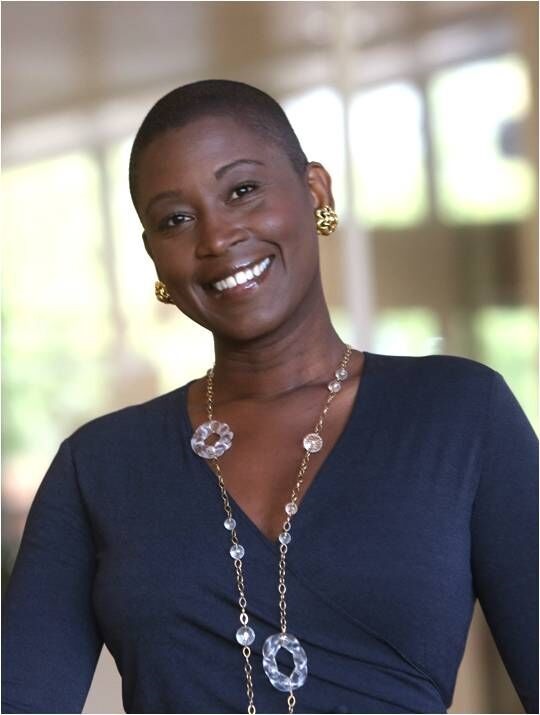 Michele Bratcher Goodwin is a Chancellor's Professor at the University of California, Irvine and founding director of the Center for Biotechnology and Global Health Policy. She is the recipient of the 2020-21 Distinguished Senior Faculty Award for Research, the highest honor bestowed by the University of California. She is also the first law professor at the University of California, Irvine to receive this award. She is an elected member of the American Law Institute as well as an elected Fellow of the American Bar Foundation and the Hastings Center (the organization central to the founding of bioethics). She is an American Law Institute Adviser for the Restatement Third of Torts: Remedies.
Adrian Gropper, Founder, HIE of One
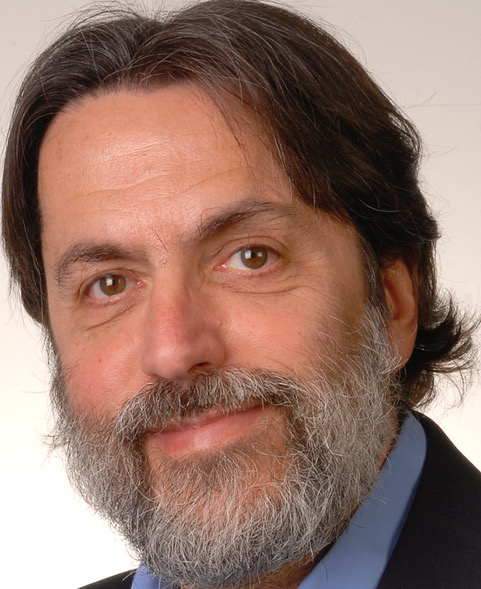 Adrian Gropper is a serial entrepreneur in healthcare computing at the intersection of novel device regulation and licensed clinical practice. Decades of strategic work in both medical and general network standards groups has provided him with expertise in mitigating regulatory capture by incumbent industry interests. Gropper uses engineering to advance open and free technology that enables self-sovereign patients, physicians and communities in health inspired by the success of blockchain methods in commerce. His paper won a prize at ONC's 2016 Blockchain Health competition. His current project, Trustee by HIE of One (Health Information Exchange of One), uses public blockchains, standards, and Free software to enable patient-controlled independent health records that can span a lifetime. This example implementation informs emerging blockchain standards development for identity, credentials, and reputation with groups that include W3C, IETF, Kantara, OpenID Foundation, and others. As Artificial Intelligence challenges regulation of tech as centralized and often secret, the model of open and free self-sovereign technology provides an alternative that keeps natural persons responsible. Gropper holds an M.D. from Harvard Medical School and a B.S. from MIT.
Woodrow Hartzog, Professor, Northeastern University School of Law
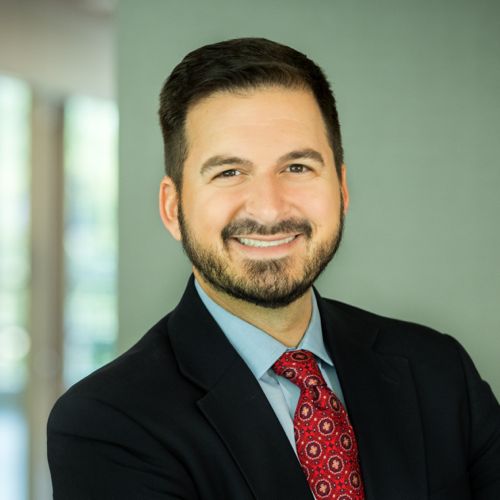 Woodrow Hartzog is a Professor of Law and Computer Science at Northeastern University School of Law and the College of Computer and Information Science. He is also an Affiliate Scholar at the Center for Internet and Society at Stanford Law School. His research focuses on privacy, contracts, media, and robotics. His work has been published in numerous scholarly publications such as the Yale Law Journal, Columbia Law Review, California Law Review, and Michigan Law Review and popular publications such as BBC, CNN, The Guardian, Wired, Bloomberg, New Scientist, Slate, The Atlantic, The Christian Science Monitor and The Nation. He has testified twice before Congress and has presented his research around the world. He has been quoted or referenced in numerous articles and broadcasts, including NPR, the New York Times, the Los Angeles Times, and USA Today. Before joining Northeastern University, he was part of the faculty at Samford University’s Cumberland School of Law. He previously worked as a trademark attorney at the United States Patent and Trademark Office and in private practice. He has also served as a clerk for the Electronic Privacy Information Center. He holds a Ph.D. in mass communication from the University of North Carolina at Chapel Hill, an LL.M. in intellectual property from the George Washington University Law School and a J.D. from Samford University’s Cumberland School of Law. His book, Privacy’s Blueprint: The Battle to Control the Design of New Technologies, was published in 2018 by Harvard University Press.
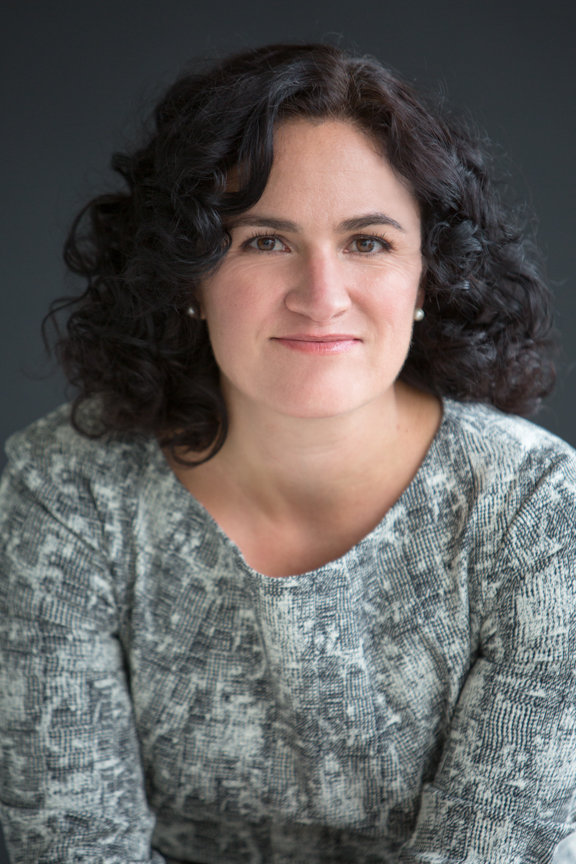 Marcia Hofmann is an attorney who specializes in privacy, information security, free expression, intermediary liability, consumer protection, intellectual property, and computer crime laws. Marcia began her legal career at EPIC as an IPIOP clerk, staff counsel, and director of the Open Government Project. She went on to become a staff attorney at the Electronic Frontier Foundation, legal director at Twitter, and founder of Zeitgeist Law PC, a boutique law practice focusing on digital civil liberties and hacking-related matters. Marcia also taught at the University of California Hastings and Colorado Law. She is currently a 2021-2022 US-UK Fulbright Cyber Security Scholar studying educational and restorative justice programs for first-time computer crime offenders.
Rush Holt, CEO, American Association for the Advancement of Science
 Rush D. Holt, Ph.D., is the chief executive officer of the American Association for the Advancement of Science (AAAS) and executive publisher of the Science family of journals. Before coming to AAAS, Holt served for 16 years as a member of the U.S. House of Representatives, representing New Jersey's 12th Congressional District. In Congress, Holt served as a member of the Committee on Natural Resources and the Committee on Education and the Workforce. He served on the National Commission on the Teaching of Mathematics and Science (known as the Glenn Commission), founded the Congressional Research and Development Caucus, and served as a co-chair of the Biomedical Research Caucus. Holt served eight years on the Permanent Select Committee on Intelligence and, from 2007 to 2010, chaired the Select Intelligence Oversight Panel.
Over his career, Dr. Holt has held positions as a teacher, scientist, administrator, and policymaker. From December 2014 to February 2015, Holt was appointed a Director's Visiting Scholar at the Institute for Advanced Study in Princeton, New Jersey. From 1989 to 1998, Holt was assistant director of the Princeton Plasma Physics Laboratory (PPPL), a Department of Energy national lab. From 1980 to 1988, Holt was on the faculty of Swarthmore College, where he taught courses in physics and public policy. In 1982, he took leave from Swarthmore to serve as an AAAS/American Physical Society Science and Technology Policy Fellow on Capitol Hill. From 1987 to 1989, Holt served as an arms control expert at the U.S. State Department, where he monitored the nuclear programs of countries such as Iraq, Iran, North Korea, and the former Soviet Union. In 1981, Holt was issued a patent for an improved solar-pond technology for harnessing energy from sunlight.
Holt is a Phi Beta Kappa graduate of Carleton College in Northfield, Minnesota, and he holds M.A. and Ph.D. degrees in physics from New York University. He is an elected fellow of AAAS, the American Physical Society, and Sigma Xi, and he holds honorary degrees from Monmouth University, Rider University, University of Toledo, and Thomas Edison State College.
Kristina Irion, Associate Professor, School of Public Policy, Central European University
 Kristina Irion is a Marie Curie fellow at the Institute for Information Law (IViR) at the University of Amsterdam. She is Associate Professor (on research leave) at the School of Public Policy at Central European University in Budapest, Hungary. Her research covers law, regulation and public policy in the field of electronic communications, online content and services as well as privacy and data protection. At present, she is implementing a research project that explores how cloud computing transforms the (legal) relationship between individuals and their personal records. She is intrigued by the combined effects of individual online transactions and commercial surveillance on society and information governance.
 Malavika is the inaugural Executive Director of the Digital Asia Hub, Hong Kong, an independent Internet and society research hub incubated by the Berkman Center for Internet and Society at Harvard University and a diverse group of academic, civil society, and private sector partners. Previously, Malavika spent over two years as a Fellow at the Berkman Center, focused on privacy, identity, biometrics and data ethics, and eight years in London, with the global law firm Allen & Overy in the Communications, Media & Technology group and as Vice President and Technology Counsel at Citigroup. While a partner at Jayaram & Jayaram in India, she was one of 10 Indian lawyers selected for The International Who?s Who of Internet e-Commerce & Data Protection Lawyers directory for 2012 and 2013. In August 2013, she was voted one of India?s leading lawyers ? one of only 8 women to be featured in the ?40 under 45? survey conducted by Law Business Research, London.
A graduate of the National Law School of India, Malavika has an LL.M. from Northwestern University School of Law, Chicago. She taught India?s first course on information technology and law in 1997, and is currently Adjunct Faculty at Northwestern as part of the new Master of Science in Law program bridging STEM subjects and the law. She has been a Fellow with the Centre for Internet & Society, India, since 2009 where she helped start their privacy program. She was a Visiting Scholar at the Annenberg School for Communication, University of Pennsylvania, and has had fellowships at the University of Sydney and the Institute for Technology & Society, Rio de Janeiro. A former dancer, she also has a fetish for modernist furniture, a serious used bookstore habit and an an overdeveloped sense of justice.
Elizabeth Joh, Affiliate Scholar, Martin Luther King Jr. Professor of Law
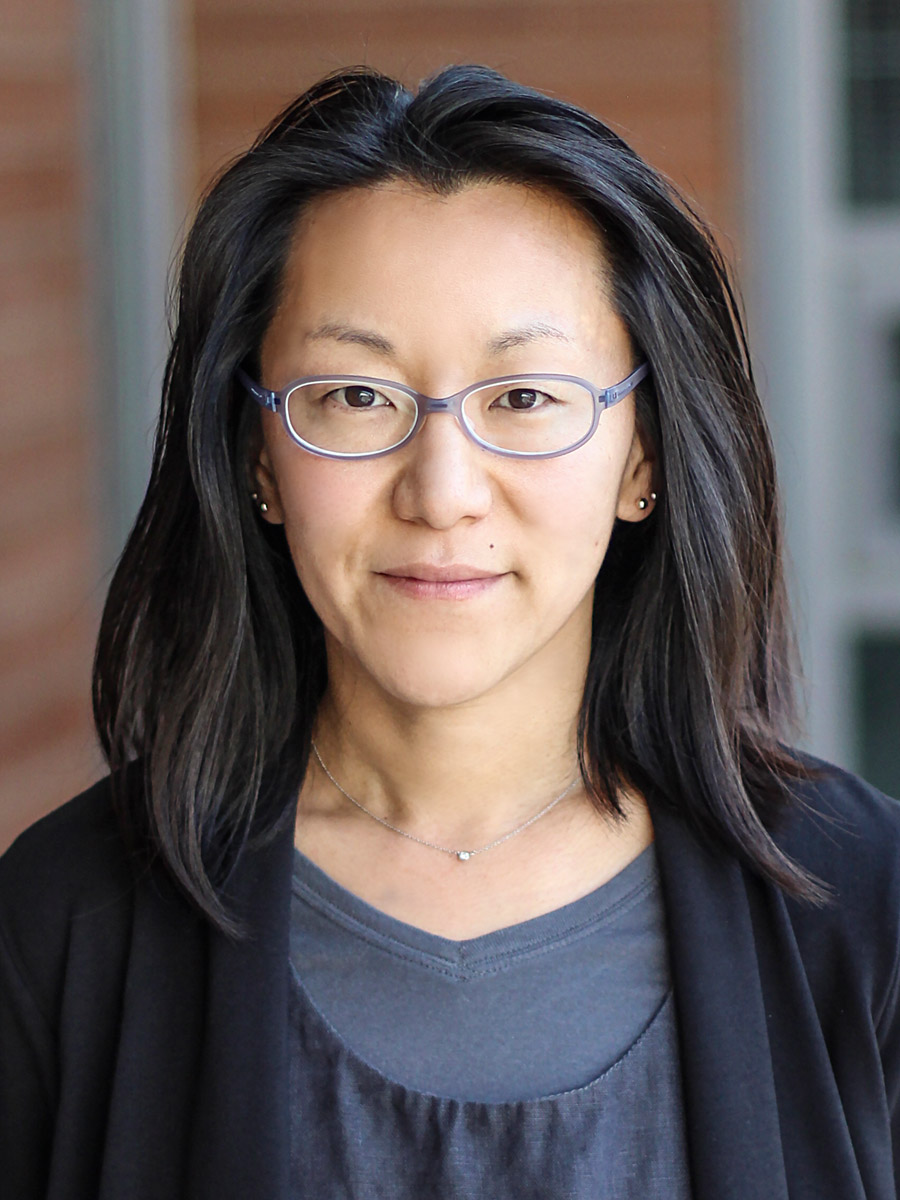 Professor Joh teaches in criminal law and procedure, constitutional law, and policing at the U.C. Davis School of Law. Her research focuses on the regulation of the police, with special emphases on undercover operations, DNA evidence collection, and new surveillance technologies. Professor Joh has been a visiting professor at Stanford Law School, and has published widely in law journals including the Stanford Law Review, the California Law Review, the Northwestern University Law Review, the Washington Law Review, and the Boston University Law Review. She received her J.D./Ph.D. (Law and Society) from New York University, and her B.A. from Yale University. After law school, Professor Joh clerked for the Honorable Stephen Reinhardt of the Ninth Circuit Court of Appeals.
Jeff Jonas, Senzing Founder and Chief Scientist
 Jeff Jonas is an acclaimed data scientist at the forefront of solving some of the world's most complex business and big data challenges. The creator of entity resolution systems that extract useful intelligence from tsunamis of data, he has tackled high-profile challenges including identifying potential terrorists, detecting fraudulent behaviour in casinos, connecting loved ones after a natural disaster, and asteroid versus asteroid interactions.
For more than three decades, Jonas has been singularly focused on creating technologies and systems that solve the world's biggest data challenges for governments and companies, while properly balancing interests in privacy, security and civil liberties. He is a three-time entrepreneur who sold his last company to IBM in 2005. With his latest company Senzing, Jonas is first focused on solving a critical missing link for General Data Protection Regulation (GDPR) compliance.
Prior to founding Senzing in 2016, Jonas was an IBM Fellow and served as Chief Scientist of Context Computing, leading a team focused on creating next-generation context computing technology, code-named G2. While he was at IBM, G2 was deployed in innovative ways, including modernizing U.S. voter registration through a joint effort with Pew Charitable Trusts, and helping the Singaporean government build a maritime domain awareness system to better protect the Malacca Straights, which carries half the world’s oil supply and one-third of the world’s commodity shipments.
Jonas spun the G2 technology and team out of IBM to found Senzing. Senzing, with G2, will democratize entity resolution—delivering affordable, smarter, real-time, entity resolution to the world at large. Senzing's first product is designed to help companies comply with GDPR by quickly determining who’s who in their data while protecting privacy.
A highly sought-after speaker, Jonas regularly meets with and speaks to government leaders, industry executives and think tanks around the globe about innovation, national security and privacy. He serves on the boards of the United States Geospatial Intelligence Foundation (USGIF) and the Electronic Privacy Information Center (EPIC), and the advisory board of the Electronic Frontier Foundation (EFF), and is a Senior Associate at the Center for Strategic and International Studies (CSIS) and a Distinguished Engineer of Information Systems (adjunct) at Singapore Management University (SMU).
Jonas was awarded an honorary Ph.D. in Science from Claremont Graduate University in 2015 and is the author or co-author of 14 patents. His work was featured in documentaries aired on the likes of the Discovery Channel, and has been the subject of prominent chapters in books such as No Place to Hide; Safe: The Race to Protect Ourselves in a Newly Dangerous World; The Numerati; and The Watchers: The Rise of America’s Surveillance State. In 2014, Jonas was named a Big Data innovator in a National Geographic profile entitled "Decoding Jeff Jonas, Wizard of Big Data."
On a more personal note, Jonas is one of only three people in the world who has completed every Ironman triathlon currently on the global circuit. This is especially significant given he was briefly a quadriplegic in 1988 following a car accident. Triathlete Magazine profiled Jonas and his triathlon accomplishments in a cover story in the print edition last September entitled "Mastermind, Madman, Miracle."
Brewster Kahle, Director, Internet Archive
 Brewster Kahle, director and co-founder of the Internet Archive, has been working to provide universal access to all human knowledge for more than fifteen years. Since the mid-1980s, Kahle has focused on developing transformational technologies for information discovery and digital libraries. In 1989 Kahle invented the Internet's first publishing system, WAIS (Wide Area Information Server) system and in 1989, founded WAIS Inc., a pioneering electronic publishing company that was sold to America Online in 1995. In 1996, Kahle founded the Internet Archive, the largest publicly accessible, privately funded digital archive in the world. At the same time, he co-founded Alexa Internet in April 1996, which was sold to Amazon.com in 1999. Alexa's services are bundled into more than 80% of Web browsers. Kahle earned a B.S. from the Massachusetts Institute of Technology (MIT) in 1982. As a student, he studied artificial intelligence with Marvin Minsky and W. Daniel Hillis. In 1983, Kahle helped start Thinking Machines, a parallel supercomputer maker, serving there as lead engineer for six years. He was selected as a member of the Upside 100 in 1997, Micro Times 100 in 1996 and 1997, and Computer Week 100 in 1995.
Margot Kaminski, Associate Professor, University of Colorado Law
 Margot Kaminski is an Associate Professor at the University of Colorado Law and the Director of the Privacy Initiative at Silicon Flatirons. She specializes in the law of new technologies, focusing on information governance, privacy, and freedom of expression. In 2018, she researched comparative and transatlantic approaches to data privacy in the Netherlands and Italy as a recipient of the Fulbright-Schuman Innovation Grant. Her academic work has been published in UCLA Law Review, Minnesota Law Review, Boston University Law Review, and Southern California Law Review, among others, and she frequently writes for the popular press. Prior to joining Colorado Law, Margot was an Assistant Professor at the Ohio State University Moritz College of Law (2014-2017), and served for three years as the Executive Director of the Information Society Project at Yale Law School, where she remains an affiliated fellow. She is a co-founder of the Media Freedom and Information Access (MFIA) Clinic at Yale Law School. She served as a law clerk to the Honorable Andrew J. Kleinfeld of the Ninth Circuit Court of Appeals in Fairbanks, Alaska.
Jerry Kang, Professor of Law and Asian American Studies, UCLA
 Jerry Kang is Distinguished Professor of Law and Asian American Studies and was the inaugural Korea Times – Hankook Ilbo Endowed Chair for Law and Korean American Studies (2010-20). He also served as the founding Vice Chancellor for Equity, Diversity and Inclusion at UCLA (2015 – 20).
Professor Kang's teaching and research interests include civil procedure, race, and communications. On race, he has focused on the nexus between implicit bias and the law, with the goal of advancing a "behavioral realism" in legal analysis. He regularly collaborates with leading experimental social psychologists on wide-ranging scholarly, educational, and advocacy projects. He also lectures broadly to lawyers, judges, government agencies, and corporations about implicit bias and what we might do about them.
On communications, Professor Kang has published on the topics of privacy, net neutrality, pervasive computing, mass media policy, and cyber-race (the construction of race in cyberspace). He is also the author of Communications Law & Policy: Cases and Materials (7th edition 2020), co-authored with EPIC Executive Director, Alan Butler.
Len Kennedy, Senior Consultant, Telecommunications, Information, and Financial Services, Neustar, Inc.
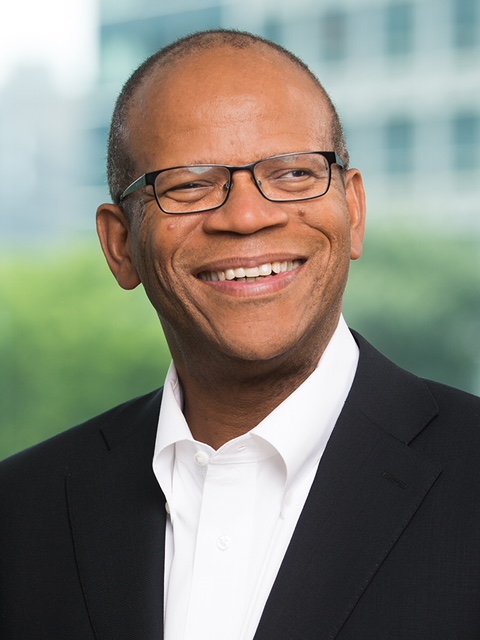 Len Kennedy is a highly regarded and award-winning corporate executive and former government official. Mr. Kennedy has served as general counsel to two Fortune 500 companies and has advised other Fortune 500 corporations, boards and senior management on business, telecommunications and media law. He has successfully advocated business and regulatory policies to federal agencies and the Congress that fostered the development of the cellular and internet communications markets and services. In his Fortune 500 roles, as the first general counsel of the Consumer Financial Protection Bureau and as general counsel of Neustar, Inc., he witnessed and addressed data security, privacy, cyber incident and web protection concerns. Having participated in the deregulation of telecommunications and the rise of the internet, he believes the full emergence of a digital networked economy, or Fourth Industrial Revolution, is at hand and requires searching inquiry and thoughtful implementation of practices and policies to ensure the values of civil society, personal privacy and economic security.
He has given numerous speeches and published articles on important topics in the field and held leadership positions in the Appleseed Foundation, Cornell Law School Advisory Council, the National Park Trust Board of Trustees and the Board of Trustees of the Sidwell Friends School and Grace Episcopal Day School.
Michael Kirby, Honorary Professorial Fellow, Former Justice, High Court of Australia, Australian National University and University of Melbourne
 Michael Kirby served as a Justice on Australia's High Court between 1996 and 2009. Michael Kirby has also served in many international and United Nations positions including two expert groups of the OECD, Paris, many bodies of the Commonwealth Secretariat, London and positions in the ILO, UNDP, UNESCO, UNODC, WHO Global Commission on AIDS, and UNAIDS. He was President of the International Commission of Jurists 1995-1998 and served as Special Representative of the Secretary General of the United Nations for Human Rights in Cambodia 1993-1996. He holds honorary degrees of Doctor of Letters, Doctor of Laws and Doctor of the University from seventeen Australian and foreign universities and various other appointments.
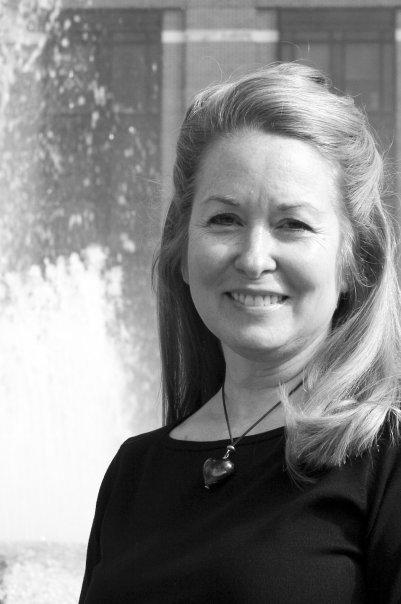 Lorraine Kisselburgh (Ph.D., Purdue University, M.S., Purdue University, A.B., University of Southern California) is a former professor of media, technology, and society in the Brian Lamb School of Communication at Purdue University. She began her career in computer science, with over 20 years as chief information officer for a large college before moving into academia. She is also a visiting lecturer in the Center for Entrepreneurship, faculty fellow in the Center for Education and Research in Information Assurance and Security (CERIAS). In 2018, she was EPIC's Scholar in Residence.
Her research focuses on the social implications of emerging technologies, including privacy, ethics, and social interaction in technological contexts. Her current projects incorporate wearable technologies to analyze creativity and collaboration in teams; cultural, generational, gender and developmental perspectives on privacy and social media use; and gendered practices in technologies and careers. Her privacy research has examined the implications of data mining, GIS, and locational data privacy; social structures of individuals with strong privacy concerns; shifting meanings of privacy across gender and age; and generational and cultural differences in privacy attitudes and behaviors in social network contexts. Her policy and planning experience has included work at the university and national levels. At Purdue she served on the technology policy committee, on three strategic planning committees for the University, College (as chair), and Technology division, and on numerous advisory committees for distance learning, instructional computing, and decision support systems. She currently serves on the executive committee of Association of Computing Machinery's (ACM) US Technology Policy Committee (USTPC), as chair of the USTPC Facebook and Data Privacy working group, and on the ACM Task Force on Code of Ethics and Professional Conduct.
Kate Klonick, Assistant Professor, St. John's University Law School
 Kate Klonick is an Assistant Professor at St. John's University Law School and an Affiliate Fellow at Yale Law School’s Information Society Project. Her research focuses on networked technologies' effect on social norm enforcement, freedom of expression, property law, and private online governance. Her writing on these topics has appeared in the Harvard Law Review, New York Times, New Yorker, The Atlantic, The Guardian, Vox, Slate, and numerous other publications. She holds a PhD from Yale Law School and a JD from Georgetown University Law School, where she was a Senior Editor of the Georgetown Law Journal and Founding Editor of the Georgetown Law Journal Online. Between her PhD and JD, she clerked for the Hon. Eric Vitaliano of the Eastern District of New York and the Hon. Richard Wesley of the Second Circuit.
Chris Larsen, CEO & Co-Founder, Prosper
 Chris Larsen is the CEO and co-founder of Prosper, America's first people-to-people lending marketplace. Prior to Prosper, Mr. Larsen co-founded and served as Chairman and CEO of E-LOAN. Mr. Larsen has also been a tireless champion for privacy rights nationally and in California where he co-founded and financially backed Californians for Privacy Now (CFPN). Mr. Larsen and CFPN led and supported grassroots efforts to safeguard consumers' privacy, and played a critical role in pressing the California state legislature to pass the strongest financial privacy law in the nation.
Travis LeBlanc, Vice Chair, Cooley LLP
 Travis LeBlanc is vice-chair of Cooley's cyber/data/privacy practice. He was Chief of the Federal Communications Commission’s Enforcement Bureau, where he led the FCC’s largest bureau and its 25 field offices. LeBlanc has previously served as special assistant attorney general of California and an adviser for then-Attorney General Kamala Harris. LeBlanc was also named to be an arbitrator to help oversee compliance with the EU-U.S. Privacy Shield agreement. He also served in the Obama Administration as an attorney in the U.S. Department of Justice’s Office of Legal Counsel.
LeBlanc has an A.B. from Princeton University, M.P.A. from Harvard's Kennedy School of Government, J.D. from The Yale Law School, and an LL.M. from the University of Cambridge.
Harry Lewis, Gordon McKay Professor, Computer Science, Harvard University School of Engineering and Applied Sciences
 Harry Lewis is Gordon McKay Professor of Computer Science in the Harvard John A. Paulson School of Engineering and Applied Sciences. Among his books are Blown to Bits: Your Life, Liberty, and Happiness After the Digital Explosion (with Hal Abelson and Ken Ledeen), which explains for the general reader the origins and public consequences of the explosion of digital information. His book about higher education, Excellence Without a Soul: Does Liberal Education Have a Future has been translated into Chinese (in both Taiwanese and mainland editions) and Korean.
Lewis began his career in computer science working in computer graphics as an undergraduate student of Ivan Sutherland, and served at NIH as a commissioned officer in the US Public Health Service before returning to Harvard for his PhD. He started teaching computer science at Harvard in 1974, and both Bill Gates and Mark Zuckerberg have been among his thousands of students. For eight years he served as Dean of Harvard College, and for half a year as interim Dean of the School of Engineering and Applied Sciences.
Anna Lysyanskaya, Professor, Computer Science, Brown University
 Anna Lysyanskaya is a Professor of Computer Science at Brown University. She received an A.B. in Computer Science and Mathematics from Smith College in 1997, and a Ph.D. in Computer Science and Electrical Engineering from MIT in 2002. She is a recipient of an NSF CAREER award and a Sloan Foundation fellowship and was included in the Technology Review Magazine's list of 35 innovators under 35 for 2007. In 2012, she was elected (and in 2015, reelected) a Director of the International Association for Cryptologic Research.
Anna Lysyanskaya's research interests are in cryptography, theoretical computer science, and computer security. A theme of her research is on balancing privacy with accountability, and specifically allowing users to prove that they are authorized even while not revealing any additional information about themselves. Her work in this area was incorporated into the Trusted Computing Group's industrial standard, served as the theoretical foundation for IBM Zurich's Idemix project, and informed the National Strategy for Trusted Identities in Cyberspace (NSTIC).
Alice Marwick, Assistant Professor, Fordham University
 Alice Marwick is Director of the McGannon Communication Research Center and Assistant Professor of Communication and Media Studies at Fordham University. Her work investigates online identity and consumer culture through lenses of privacy, surveillance, consumption, and celebrity. Her first book, "Status Update: Celebrity and Attention in Web 2.0" (Yale University Press, 2013) is based on a multi-year ethnography of the San Francisco tech industry. Marwick's current projects involve a study of sexism and misogynistic speech online conducted with CLIP; a long-term ethnographic research project on youth social media use in collaboration with Dr. danah boyd; and a tripartite project on conspicuous consumption involving fashion blogging, Pinterest, and Tumblr. Marwick was previously a postdoctoral researcher in the Social Media Collective at Microsoft Research New England. She is a frequent presenter at academic and industry conferences, regularly speaks to the press about various aspects of social media, and has written for The New York Times, The Daily Beast and The Guardian in addition to academic publications. Alice has a PhD from the Department of Media, Culture and Communication at New York University, a MA from the University of Washington and a BA from Wellesley College.
Gary Marx, Professor, Massachusetts Institute of Technology
 Gary T. Marx is Professor Emeritus, M.I.T. He is the author of award winning books such as Windows Into the Soul: Surveillance and Society in an Age of High Technology; Undercover: Police Surveillance in America and Protest and Prejudice. His articles have appeared in major research journals, as have several symposia on his work. He has been an editor or co-editor for more than 20 journals. His work has been widely cited, reprinted and translated and he has written 14 introductions, or after-words, for colleague's books. His webpage www.garymarx.net has received almost 3 million visits. He is the recipient of grants and fellowships from groups such as the Guggenheim Foundation, the National Science Foundation, the National Institute of Justice, the Century Foundation, the Woodrow Wilson International Center, the Center for Advanced Study in the Behavioral Sciences, the Rockefeller Center in Bellagio, the Max Planck Institute, the European University Institute and the Tilburg Institute for Law, Technology and Society. He received an honorary doctorate from Vrije University in Brussels. Before MIT, he held positions at his PhD school the UC Berkeley, Harvard and the University of Colorado. He has held visiting professorships at many other schools such as Northwestern, Harvey Mudd, and West Virginia University and he has taught in Canada, China, Austria and Belgium. He has been a consultant to, or served on panels for national commissions, legislative bodies, government agencies, public interest groups, foundations and think tanks in North America, Europe, Australia, China and Japan.
Aleecia Mcdonald, Director of Privacy, Stanford Center For Internet & Society
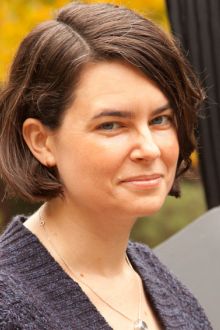 Aleecia M. McDonald is the Director of Privacy at Stanford's Center for Internet & Society. Her research focuses on the public policy issues of Internet privacy, and includes user expectations for Do Not Track, behavioral economics and mental models of privacy, and the efficacy of industry self regulation. She co-chaired, and remains active in, the WC3's Tracking Protection Working Group, an ongoing effort to establish international standards for a Do Not Track mechanism that users can enable to request enhanced privacy online. This effort brings together over 100 international stakeholders from industry, academia, civil society, privacy advocates, and regulators to reach an open, consensus-based multi-party agreement that will establish a baseline for what sites must do when they comply with an incoming request for user privacy. Aleecia's decade of experience working in software startups adds a practical focus to her academic work, and she was a Senior Privacy Researcher for Mozilla (part-time, 2011-12,) while working for CIS as a Resident Fellow (part-time, 2011-12.) She holds a PhD in Engineering & Public Policy from Carnegie Mellon where she studied online privacy as a member of the Cylab Usable Privacy and Security (CUPS) research laboratory. Her findings have been featured in media outlets such as the Washington Post, Ars Technica, Free Press' Media Minute. She has presented findings in testimony to the California Assembly, and contributed to testimony before the United States Senate and the Federal Trade Commission.
William McGeveran, Associate Dean for Academic Affairs, Contact Information University of Minnesota Law School
 Professor William McGeveran specializes in information law, including data privacy, intellectual property, communications and technology, and free speech. In addition to his teaching and scholarship, he currently serves as the Associate Dean for Academic Affairs. McGeveran’s research focuses on legal and other rules governing digital identity and privacy, ranging from online impersonation to data security to social media. Additional aspects of his research include modernizing trademark law, comparing European and American approaches to data protection, and evaluating techniques used by privacy regulators. McGeveran is the sole author of a casebook, Privacy and Data Protection Law, used by instructors at two dozen law schools, and regularly teaches a data privacy course at Minnesota Law. He also teaches Trademark Law, Civil Procedure I and II, and Law in Practice. McGeveran earned a J.D., magna cum laude, from New York University and a B.A., magna cum laude, in political science from Carleton College. Prior to coming to the University of Minnesota, McGeveran was a resident fellow at the Berkman Center for Internet and Society at Harvard Law School. He previously clerked for Judge Sandra Lynch on the United States Court of Appeals for the First Circuit and practiced as an intellectual property litigator at Foley Hoag LLP in Boston. Before law school, McGeveran worked in national politics for seven years, including as a senior legislative aide to then-Rep. Charles Schumer. He grew up in New York City.
Roger McNamee, Co-Founder, Elevation Partners
 Roger McNamee began his career in 1982 at T. Rowe Price Associates, where he managed the top performing Science & Technology Fund and co-managed their New Horizons Fund. In 1991, he launched Integral Capital Partners, the first crossover fund (combining later stage venture capital with public market investments), in partnership with Kleiner Perkins Caufield & Byers and Morgan Stanley & Co. In 1999, Roger co-founded Silver Lake Partners, the first private equity fund focused on technology businesses. In 2004, Roger and his partners launched Elevation Partners, an investment partnership focused on the intersection of media/entertainment content and consumer technology.
Roger performs up to 100 concerts a year in the bands Moonalice and Doobie Decibel System, in which he plays bass and guitar. Moonalice pioneered the use of social media in music, inventing such applications as Twittercast concerts, Moonalice Radio on Twitter, live Moontunes video streams of concerts, and the Moonalice Couch Tour.
Roger is a co-founder of the Haight Street Art Center and the Center for Counterculture Studies. He also serves on the board of directors for the Rock and Roll Hall of Fame Museum. Roger is a past member of boards of the Tuck School of Business at Dartmouth College, Bryn Mawr College, The GRAMMY Foundation, and the operating business of the National Geographic Society. He was also responsible for raising the money that created the Wikimedia Foundation.
Roger holds a B. A. from Yale University and an M.B.A. for the Amos Tuck School of Business at Dartmouth College. Roger holds a U.S. patent related to MoonTunes and the live broadcast of video to mobile devices.
Mary Minow, Presidential Appointee, National Museum and Library Services Board
 In December 2014, President Obama tapped Mary Minow for National Museum and Library Services Board. Minow received her B.A. from Brown University, her A.M.L.S. from the University of Michigan, Ann Arbor, and her J.D. from Stanford University. She is a consultant specializing in library law, consulting with libraries on First Amendment, privacy, and other issues.
Minow worked for over ten years as a public librarian, with positions ranging from outreach to reference to branch manager. In addition to this, she has experience with special and academic libraries, and in the information industry as an online database consultant with Dialog Information Services. She has also served as an advisor to the Library of Congress on internet access issues. Minow is coauthor of The Library's Legal Answer Book (American Library Association: 2003), and writes articles on libraries and free speech, privacy and copyright issues.
Jennifer Mnookin, Dean, University of California, Los Angeles School of Law
 Jennifer L. Mnookin, David G. Price and Dallas P. Price Professor of Law, became dean of the UCLA School of Law in August 2015. A member of the UCLA Law faculty since 2005, she served as Vice Dean for Faculty and Research from 2007 to 2009, and Vice Dean for Faculty Recruitment and Intellectual Life in 2012-13.
A leading evidence scholar, Dean Mnookin is founder and faculty co-director of PULSE @ UCLA Law (the Program on Understanding Law, Science & Evidence). She is a co-author of two major evidence treatises, The New Wigmore, A Treatise on Evidence: Expert Evidence and Modern Scientific Evidence: The Law and Science of Expert Testimony. She has published extensively on issues relating to forensic science, including latent fingerprint identification, handwriting expertise and DNA evidence, and has advocated for the need for a "research culture" in these areas. Dean Mnookin is also known for her scholarship on expert evidence, evidence theory, the Confrontation Clause, and visual and photographic evidence.
Dean Mnookin is a member of the National Academy of Sciences' Committee on Science, Technology and Law. She co-chaired a group of senior advisors for a President's Council of Advisors on Science and Technology report on use of forensic science in criminal courts; and is on the steering committee of the Association of American Law Schools’ Deans Forum. She was elected to the American Law Institute in 2011.
Prior to joining UCLA Law, Dean Mnookin was professor of law and Barron F. Black Research Professor at the University of Virginia School of Law, and visiting professor of law at Harvard Law School. She received her A.B. from Harvard University, her J.D. from Yale Law School, and a Ph.D. in History and Social Study of Science and Technology from M.I.T.
Pablo G. Molina, CIO, American Association of Law Schools
 Dr. Pablo Molina is the Chief Information Officer of the American Association of Law Schools, and an adjunct professor at Georgetown University, where he teaches graduate courses in ethics and technology management, managing information security and Internet governance. He is the Executive Director of the International Applied Ethics and Technology Association.
Pablo has Bachelor's and Master's degrees from Saint Louis University, and a Doctorate degree from Georgetown University on the adoption of technology in higher education. He is a Certified Information Systems Security Professional, and a Certified Information Privacy Professional.
He regularly speaks at conferences on technology, education and policy, e.g., United Nations and USA Internet Governance Forums, International Conference of Data Protection and Privacy Commissioners, Information Security Forums, Congressional Hispanic Leadership Institute, EDUCAUSE, American Bar Association, American Association of Law Schools, and American Association of Law Libraries. Pablo has served on national higher education committees as member of the Facilities Committee of the ABA Legal Education and Admissions to the Bar Section, chair and member of the EDUCAUSE Evolving Technologies Committee, and member of the EDUCAUSE Professional Development Committee. He serves on the boards of the Electronic Privacy Information Center and the Hispanic Technology Council. He was the recipient of the 2006 CIO Magazine Ones to Watch Award and the Standout Achievement Award as Innovator and was recognized in 2007 as one of the Top 40 Under 40 IT Innovators by ComputerWorld. In his tenure at Georgetown University, he has received 14 national awards and 3 University ones, including Outstanding Faculty Member in 2012.
Jumana Musa, Director of The Fourth Amendment Center, National Association of Criminal Defense Lawyers
 Jumana Musa is a human rights attorney and racial justice activist. She is currently the Director of the Fourth Amendment Center at the National Association of Criminal Defense Lawyers. The Fourth Amendment Center educates the defense bar on privacy challenges in the digital age, provides a dynamic toolkit of resources to help lawyers identify opportunities to challenge government surveillance, and establishes a tactical litigation support network to assist in key cases. Ms. Musa previously served as NACDL's Sr. Privacy and National Security Counsel. Prior to joining NACDL, Ms. Musa served as a policy consultant for the Southern Border Communities Coalition, a coalition of over 60 groups across the southwest that address militarization and brutality by U.S. Customs and Border Protection agents in border communities. Previously, she served as Deputy Director for the Rights Working Group, a national coalition of civil rights, civil liberties, human rights, and immigrant rights advocates where she coordinated the "Face the Truth" campaign against racial profiling. She was also the Advocacy Director for Domestic Human Rights and International Justice at Amnesty International USA, where she addressed the domestic and international impact of U.S. counterterrorism efforts on human rights. Ms. Musa has also worked as a policy attorney for the National Network to End Domestic Violence and handled international relations and immigration issues as a fellow in the office of Congressman Jesse L. Jackson, Jr. As an adjunct professor at Georgetown University's Center for Contemporary Arab Studies, she taught the course "Human Rights in the Middle East and North Africa." In 2016, Ms. Musa received the Ralph Johns Civil Rights Award from the Arab-American Anti-Discrimination Committee in recognition of her work. Ms. Musa holds a BA in International Relations from Brown University and a JD from Georgetown University Law Center.
Peter Neumann, SRI International
 Peter G. Neumann has doctorates from Harvard and Darmstadt. After 10 years at Bell Labs in Murray Hill, New Jersey, in the 1960s, he has been in SRI's Computer Science Lab since September 1971. He is concerned with computer systems and networks, security, reliability, survivability, safety, and many risks-related issues such as voting-system integrity, crypto policy, social implications, and human needs including privacy. He moderates the ACM Risks Forum, edits CACM's monthly Inside Risks column, chairs the ACM Committee on Computers and Public Policy, co-chairs the ACM Advisory Committee on Security and Privacy, co-founded People For Internet Responsibility (PFIR), and CO-founded the Union for Representative International Internet Cooperation and Analysis (URIICA). His book, Computer-Related Risks, is in its fifth printing. He is a Fellow of the ACM, IEEE, and AAAS, and is also an SRI Fellow. He is a member of the U.S. General Accounting Office Executive Council on Information Management and Technology. He has taught at Stanford, U.C. Berkeley, and the University of Maryland.
Craig Newmark, Founder, Craigslist and the Craig Newmark Foundation
 Craig is the founder of craigslist, a philanthropist, and a leading advocate on behalf of trustworthy journalism, veterans and military families, voting rights, women in tech, as well as other civic and social justice causes. He is a founding funder and executive committee member of the News Integrity Initiative administered by the CUNY Graduate School of Journalism. In 2016 he created the Craig Newmark Foundation which funded the Craig Newmark Chair in Journalism Ethics at the Poynter Institute. Craig serves on the board of directors of the Center for Public Integrity, Columbia Journalism Review, Poynter Foundation, Sunlight Foundation, Blue Star Families, Iraq and Afghanistan Veterans of America, VetsInTech, Girls Who Code, Women in Public Service Project, and Consumers Union/Consumer Reports. He also serves on the advisory boards of nearly twenty other renowned nonprofit organizations. Born in Morristown, New Jersey, he now lives in San Francisco.
Helen Nissenbaum, New York University
 Helen Nissenbaum is Professor of Media, Culture and Communication, and Computer Science, at New York University, where she is also Senior Faculty Fellow of the Information Law Institute. Her areas of expertise span social, ethical, and political implications of information technology and digital media. Nissenbaum's research publications have appeared in journals of philosophy, politics, law, media studies, information studies, and computer science. She has written and edited three books and a fourth, Privacy in Context: Technology, Policy, and the Integrity of Social Life, is due out in 2009, with Stanford University Press. The National Science Foundation, Air Force Office of Scientific Research, Ford Foundation, and U.S. Department of Homeland Security have supported her work on privacy, trust online, and security, as well as several studies of values embodied in computer system design, including search engines, digital games, and facial recognition technology. Nissenbaum holds a Ph.D. in philosophy from Stanford University and a B.A. (Hons) from the University of the Witwatersrand. Before joining the faculty at NYU, she served as Associate Director of the Center for Human Values at Princeton University.
Ray Ozzie, Director, Safecast
 Ray Ozzie is an American software industry entrepreneur who held the positions of Chief Technical Officer and Chief Software Architect at Microsoft between 2005 and 2010. Prior to Microsoft he was best known for his work in the area of social productivity as the creator of Lotus Notes.
Earlier in his career Ozzie developed Symphony for Lotus. He worked on Lotus 1-2-3, on VisiCalc and TK!Solver at Software Arts, and on operating systems at Data General.
More recently, he founded and served as CEO of Talko, a developer of voice-centric mobile apps and services for business team communications. Talko was purchased by Microsoft in late 2015.
Ozzie has received numerous industry honors for his work, including IEEE’s W. Wallace McDowell Award. In 2004 Ozzie was inducted as a member of the National Academy of Engineering, and in 2010 he was named as a fellow of the American Academy of Arts & Sciences.
He currently serves as a director of Hewlett Packard Enterprise, Safecast, and Balena, and as an advisor to AT&T.
Frank Pasquale, Professor, University of Maryland Francis King Carey School of Law
 Frank researches the law and policy of big data, artificial intelligence, privacy, and algorithms. He is a co-founder of the Association for the Promotion of Political Economy and Law (APPEAL). He has testified before or advised groups including the US Department of Health and Human Services, House Judiciary Committee, Senate Banking Committee, House Energy & Commerce Committee, and Federal Trade Commission, as well as directorates-general of the European Commission.
Frank is the author of The Black Box Society (Harvard University Press, 2015). The book developed a social theory of reputation, search, and finance, and has been translated into Chinese, French, and Korean. He has served as a member of the NSF-sponsored Council on Big Data, Ethics, & Society, a visiting fellow at Cambridge and Princeton Universities, a visiting professor at Yale Law School, and a visiting scholar at National Taiwan University.
Frank is one of the 10 most cited US scholars in health law, according to a study published on Harvard Law School's Bill of Health blog in 2017. He has co-authored a casebook on administrative law and co-authored or authored over 50 scholarly articles. He co-convened the conference "Unlocking the Black Box: The Promise and Limits of Algorithmic Accountability in the Professions" at Yale University, and a roundtable on Medical Automation and Robotics Law & Policy at the University of Maryland. He is now at work on a book tentatively titled Laws of Robotics: Revitalizing Professions in an Era of Automation (under contract to Harvard University Press).
Harriet Pearson, Hogan Lovells
 Harriet Pearson is a partner at Hogan Lovells and was the former Vice President, Security Counsel & Chief Privacy Officer at IBM. IBM's CPO since 2000, she leads the company's global compliance, law and policy initiatives in privacy, data protection and cybersecurity. She serves on the executive committee of the Center for Information Policy Leadership; the board of the International Association of Privacy Professionals (IAPP); the CSIS Commission on Cybersecurity for the 44th Presidency; and the Steering Committee of the Data Security Council of India.
Harriet graduated from the UCLA School of Law (Order of the Coif) and earned an honors undergraduate engineering degree from Princeton University. Before joining IBM in 1993 she practiced law in a Washington, D.C. law firm and briefly worked for Shell Oil on offshore production platforms in the Gulf of Mexico. In 2007 she won the IAPP's Vanguard Award, given annually to the professional who exemplifies leadership and innovation in the field of privacy. IBM itself has been recognized as the top "Most Trusted for Privacy" business-to-business company in the U.S. and Canada several times by the TRUSTe/Ponemon independent survey of consumers.
Outside of IBM, Harriet teaches a graduate seminar on Security, Privacy & Trust at Georgetown University and sings with the DC-area Potomac Harmony Chorus. She currently serves on the Chorus board and on the board of directors for an American K-thru-college private school located in Thessaloniki, Greece. A first-generation American, she speaks Greek fluently.
Deborah Peel, Patient Privacy Rights
 Deborah C. Peel, MD, is the Founder and President of Privacy Rights (PPR), with 9,000 e-members. PPR is the world's leading advocate for the broad universal human and civil right to privacy, focused on the most sensitive personal data, information about our minds and bodies.
PPR’s mission is to restore patient control over personal health information. To accomplish our mission, we educate and work collaboratively with patients and organizations to restore the ethical right to health information privacy, the foundation of the patient-physician relationship, in law, policy, and technology.
Major ongoing projects are 1) the annual International Summits on the Future of Health Privacy at Georgetown Law Center on emerging health privacy issues and solutions, and the Louis D. Brandeis Privacy Awards Gala and 2) promoting the Privacy Trust Framework with 75+ auditable criteria to rate privacy protections, and enable public trust. Harvard researchers Shore and Steinman called it the world’s ‘gold standard’ and used it to rate the evolution of Facebook’s privacy policy over 5 years: http://techscience.org/a/2015081102/
Stephanie Perrin, President, Digital Discretion, Inc.
 Stephanie Perrin is President of Digital Discretion, Inc. She was the former Director of Integrity Policy at Service Canada, the largest service delivery department in the Canadian federal government, and also the former Director of Research and Policy at the Office of Privacy Commissioner, Canada. She was a well-known consultant in privacy and information policy issues, providing advice to industry and government in the practical implementation of data protection policies and procedures, and. an active participant in policy discussions involving civil liberties. She is the former Chief Privacy Officer of Zero-Knowledge, the first CPO in Canada, and has been active in a number of CPO associations, working with those responsible for implementing privacy in their organizations. Active in domestic and international privacy policy and compliance fora, Stephanie has been involved in privacy issues at the practical, policy and legislative level for many years.
Stephanie was instrumental in developing Canada's privacy and cryptography policies for over fifteen years. In the early eighties, Stephanie was one of Canada's first Freedom of Information and Privacy Officers, and was the first President of the professional association, the Canadian Access and Privacy Association. She has received awards for her work in furthering international work in freedom of information and privacy from the Electronic Frontier Foundation (Pioneer 2001) and the B.C. Freedom of Information and Privacy Association (2001).
Dr. Bilyana Petkova, Assistant Professor, Maastricht University
 Dr. Bilyana Petkova joined the Department of International and European Law of Maastricht University in the Netherlands as a tenure-track Assistant Professor in September 2017. She is affiliated as a Visiting Scholar at the Yale Information Society Project since 2014. Before joining UM, Bilyana was a Max Weber postdoctoral fellow at the European University Institute in Florence, Italy and at New York University where she was a part of the Jean Monnet Center and later, the NYU Information Law Institute. Her research interests are in comparative constitutional law, judicial legitimacy, federalism and human rights, with a recent focus on data-driven cities, US-EU privacy law and freedom of speech in a digital age. Her paper "The Safeguards of Privacy Federalism" won a Young Scholars Award at the Eight Privacy Law Scholars Conference in the University of Berkeley, California. Bilyana publishes in both US-based and European editions. Among others, her book chapters have appeared with Oxford and Cambridge University Press, and articles - in the Lewis & Clark Law Review, the Northwestern Journal of Technology and Intellectual Property, the European Law Journal, the Common Market Law Review, the International Journal of Constitutional Law (I-CON) and the Maastricht Journal of European and Comparative Law. In 2019, as a Fellow-in-Residence at the Electronic Privacy Information Center in Washington, D.C., Bilyana will work on a book project, forthcoming with NYU Press.
Priscilla Regan, Professor, Schar School of Policy and Government, George Mason University
 Priscilla Regan is a Professor in the Schar School of Policy and Government at George Mason University. Prior to that, she was a Senior Analyst in the Congressional Office of Technology Assessment (1984-1989). From 2005 to 2007, she served as a Program Officer for the Science, Technology and Society Program at the National Science Foundation. Since the mid-1970s, Dr. Regan's primary research interests have focused on both the analysis of the social, policy, and legal implications of organizational use of new information and communications technologies. She has published over seventy articles or book chapters, as well as "Legislating Privacy: Technology, Social Values, and Public Policy" (University of North Carolina Press, 1995) and two co-edited books. She is currently a co-investigator on a Social Sciences and Humanities Research Council of Canada's eQuality grant exploring big data, discrimination, and youth. She was a member of the National Academy of Sciences, Computer Science and Telecommunications Board, Committee on Authentication Technologies and their Privacy Implications. She is a Fellow of the National Academy of Public Administration. Dr. Regan received her PhD in Government from Cornell University.
Ronald L. Rivest, Professor of Electrical Engineering and Computer Science, MIT
 Ronald L. Rivest is an MIT Institute Professor in the Department of Electrical Engineering and Computer Science. Professor Rivest He is a member of MIT's Computer Science and Artificial Intelligence Laboratory (CSAIL), a member of the lab's Theory of Computation Group and a founder of its Cryptography and Information Security Group. He is also a founder of RSA Data Security (now called RSA Security and a unit of Dell) and of Peppercoin. Professor Rivest has research interests in cryptography, computer and network security, electronic voting, and algorithms. He is an ACM Turing Award winner and a member of both the National Academy of Engineering and the National Academy of Sciences.
Pam Samuelson, Professor, UC Berkeley, School of Information Management and Systems and School of Law
 Pamela Samuelson is Chancellor's Professor at the University of California at Berkeley with a joint appointment in the School of Information Management & Systems as well as in the School of Law where she is a Director of the Berkeley Center for Law & Technology. She teaches courses on intellectual property, cyberlaw and information policy. She has written and spoken extensively about the challenges that new information technologies pose for traditional legal regimes, especially for intellectual property law and is an advisor for the Samuelson Law, Technology and Public Policy Clinic. A 1976 graduate of Yale Law School, she practiced law as an associate with the New York law firm Willkie Farr & Gallagher before turning to more academic pursuits. From 1981 through June 1996 she was a member of the faculty at the University of Pittsburgh Law School, from which she visited at Columbia, Cornell, and Emory Law Schools.
In June of 1997 Samuelson was named a Fellow of the John D. and Catherine T. MacArthur Foundation. She is also a Fellow of the Association of Computing Machinery, a Public Policy Fellow and a member of the Board of Directors of the Electronic Frontier Foundation, and a member of the American Law Institute. Since 1990 she has been a Contributing Editor of the computing professionals' journal, Communications of the ACM, for which she has written a regular "Legally Speaking" column. Samuelson is currently serving on the National Research Council's Study Committee on Intellectual Property Rights in the Knowledge-Based Economy and previously served on the Council's Study Committee on Intellectual Property Rights and the National Information Infrastructure which produced a report entitled "The Digital Dilemma: Intellectual Property Rights in an Information Age." In June 2000, the National Law Journal named her as one of the hundred most influential lawyers in the U.S.
Vivian Schiller, Executive Director, Aspen Institute
 Vivian Schiller is a longtime executive at the intersection of journalism, media, and technology. She recently joined the Aspen Institute in a new position heading up programs across media, technology, and cybersecurity. Over the last 30 years, Vivian has held executive roles at some of the most respected media organizations in the worlds. Those include: President and CEO of NPR; Global Chair of News at Twitter; General Manager of NYTimes.com; Chief Digital Office of NBC News; chief of the Discovery Times Channel; and head of CNN documentary and long form divisions. Schiller is a member of the Council of Foreign Relations; and a Director of the Scott Trust, which owns The Guardian. She is also the strategic advisor to Craig Newmark Philanthropies.
 Bruce Schneier is an internationally renowned security technologist, called a "security guru" by The Economist. He is the author of 14 books -- including the New York Times best-seller Data and Goliath: The Hidden Battles to Collect Your Data and Control Your World -- as well as hundreds of articles, essays, and academic papers. His influential newsletter "Crypto-Gram" and blog "Schneier on Security" are read by over 250,000 people. Schneier is a fellow at the Berkman Center for Internet and Society at Harvard University, and a fellow at the Belfer Center at Harvard's Kennedy School of Government. He is also a special advisor to IBM Security and the Chief Technology Officer of Resilient.
Max Schrems, Lawyer, Author, and founder of of europe-v-facebook.org
 Max Schrems is a lawyer, author, and founder of europe-v-facebook.org. Max has studied law in Vienna and California. Since 2011 he has worked on the enforcement of EU data protection law in various ways, including procedures before different data protection authorities and a class action with more than 25.000 members which is currently pending at the Austrian Supreme Court. He has succeeded in his challenge against the "Safe Harbor" system at the European Court of Justice, based on the disclosures of Edward Snowden and worked on the EU data protection reform through projects like lobbyplag.eu.
Katie Shilton, Assistant professor, Information Security, University of Maryland
 Katie Shilton is an associate professor in the College of Information Studies at the University of Maryland, College Park. Her research focuses on ethics and policy for the design of information technologies, systems, and collections. She teaches courses in information policy, information and technology ethics, and digital curation.
Katie leads the Ethics & Values in Design (EViD) Lab at the UMD iSchool, and is active in the CASCI, IPAC and DCIC research centers. Her work has been supported by a Google Faculty Award and several awards from the U.S. National Science Foundation, including an NSF CAREER award.
Katie received a B.A. from Oberlin College, a Master of Library and Information Science from UCLA, and a Ph.D. in Information Studies from UCLA.
Barbara Simons, Dr., IBM Research (retired)
 Barbara Simons has been on the Board of Advisors of the U.S. Election Assistance Commission (EAC) since 2008. She co-authored the 2004 report that led to the cancellation of the DoD's internet voting project (SERVE). A former ACM President, Simons co-chaired the ACM study of statewide databases of registered voters and the LWV report on election auditing. Simons, retired from IBM Research, is a Fellow of ACM and AAAS, and received the Distinguished Engineering Alumni Award from the Berkeley College of Engineering, the CRA Distinguished Service Award, and the EFF Pioneer Award. She co-authored Broken Ballots: Will Your Vote Count?, and is Board Chair of Verified Voting.
Scott Skinner-Thompson, Associate Professor, Colorado Law School
 Scott Skinner-Thompson is an associate professor at Colorado Law School, where he researches constitutional law, civil rights, and privacy law, with a particular focus on LGBTQ and HIV issues. Bringing together these topics, his new book, Privacy at the Margins, examines how privacy can function as an expressive, anti-subordination tool of resistance to surveillance regimes helping create a more equitable public sphere.
Paul M. Smith, Jenner & Block, LLP
 Paul M. Smith is a Distinguished Visitor from Practice teaching Election Law and Constitutional Law at Georgetown University Law Center. He is also VP for Litigation and Strategy at the Campaign Legal Center. He is well known as a Supreme Court litigator, having argued 21 cases in that Court. Among his important victories have been Lawrence v. Texas, the landmark gay rights case, and Brown v. Entertainment Merchants Ass’n, establishing the First Amendment rights of those who produce and sell video games. This Term he argued the Wisconsin gerrymandering case and Husted v. APRI, involving the legality of Ohio's system of purging registered voters for not voting.
Mr. Smith graduated summa cum laude and Phi Beta Kappa from Amherst College in 1976 and received a J.D. from Yale Law School in 1979, where he served as Editor-in-Chief of the Yale Law Journal. He clerked for Judge James Oakes on the Second Circuit and for Supreme Court Justice Lewis F. Powell Jr. He has been named one of the best lawyers in the field of Appellate, Litigation, First Amendment, and Media and Entertainment Law in addition to being the recipient of many awards.
Amie Stepanovich, Executive Director, Silicon Flatirons
 Amie Stepanovich is the Executive Director at Silicon Flatirons. She is a nationally recognized expert in domestic surveillance, cybersecurity, and privacy law. Amie previously served as U.S. Policy Manager and Global Policy Counsel at Access Now in Washington, D.C., where she worked to protect human rights through law and policy involving technologies and their use. Prior to that, she was the Director of the Domestic Surveillance Project at the Electronic Privacy Information Center. She has testified in both the U.S. Senate and the House of Representatives, and before the German and Australian Parliaments. She serves as a board member to the Internet Education Foundation, an advisory board member to the Future of Privacy Forum, and is on the curriculum council for Data Protocol. In 2014, Amie was named in Forbes Magazine’s 30 Under 30 Leaders in Law and Policy.
Jennifer Stoddart, Strategic Advisor, Fasken
 Jennifer Stoddart, currently a Strategic Advisor at Fasken, was the Privacy Commissioner of Canada from 2003 to 2013. In that position, she oversaw numerous investigations involving the virtual world, including the personal information protection policy of a social networking website and data security vulnerabilities of an American retail giant. Previously, she was the Chair of the Commission d'accès à l'information du Québec from 2000 to 2003; during her term, the Commission released a report entitled Reforming Access to Information: Choosing Transparency. This report led to major changes to the legislation governing access to information and the protection of personal information. She has also held positions on the Human Rights Commissions of Canada and Québec.
Katherine Strandburg, Alfred B. Engelberg Professor of Law, New York University School of Law
 An expert in patent law, innovation policy, and information privacy law, Katherine Strandburg began her career as a theoretical physicist at Argonne National Laboratory. Her research considers the implications of user and collaborative innovation for patent law and of "big data" for privacy law. Her forthcoming book Governing Medical Commons (co-edited with B. Frischmann and M. Madison, 2016), continues her investigation of commons-based innovation. Based on research reflected in publications such as "Membership Lists, Metadata, and Freedom of Association's Specificity Requirement," 10 ISJLP 327 (2014), Strandburg was an invited panelist at the Privacy and Civil Liberties Oversight Board’s May 2015 Public Meeting on Executive Order 12333. Strandburg's brief on behalf of several medical associations was cited in a 2012 Supreme Court opinion involving the patent eligibility of medical diagnostic procedures. Strandburg received her BS from Stanford University, her PhD from Cornell University, and her JD with high honors from the University of Chicago. She clerked for the late Judge Richard Cudahy of the US Court of Appeals for the Seventh Circuit. Prior to her legal career, Professor Strandburg was a research physicist at Argonne National Laboratory, having received her Ph.D. from Cornell University in 1984 and conducted postdoctoral research at Carnegie Mellon. She was a visiting faculty member of the physics department at Northwestern University from 1990-1992.
Nadine Strossen, New York Law School
 Nadine Strossen has written, lectured, and practiced extensively in the areas of constitutional law, civil liberties, and international human rights. From 1991 through 2008 she served as president of the American Civil Liberties Union, the first woman to head the nation's largest and oldest civil liberties organization. Professor Strossen is currently a member of the ACLU's National Advisory Council. When Professor Strossen stepped down as ACLU President in 2008, three Supreme Court Justices (Ruth Bader Ginsburg, Antonin Scalia, and David Souter) participated in her farewell/tribute luncheon. Professor Strossen has made thousands of public presentations before diverse audiences, including on more than 500 campuses and in many foreign countries. She has commented frequently on legal issues in the national media, having appeared on virtually every national news program. She has been a monthly columnist for two online publications and a weekly commentator on the Talk America Radio Network. Professor Strossen's writings have been published in many scholarly and general interest publications (more than 300 published works). Professor Strossen graduated Phi Beta Kappa from Harvard College (1972) and magna cum laude from Harvard Law School (1975), where she was an editor of the Harvard Law Review. Before becoming a law professor, she practiced law for nine years in Minneapolis (her hometown) and New York City.
Latanya Sweeney, Harvard University School of Engineering and Applied Sciences
 Latanya Sweeney is Associate Professor of Computer Science, Technology and Policy in the School of Computer Science at Carnegie Mellon University. She has made a career of weaving technology and policy together. Dr. Sweeney develops algorithms and constructs real-world systems that allow information to be shared with provable guarantees of privacy (legally and scientifically) while remaining practically useful. Dr. Sweeney has made numerous discoveries related to identifiability and privacy technologies and she has had significant impact on American privacy policy. Her work has received awards from numerous organizations, including the American Psychiatric Association, the American Medical Informatics Association, and the Blue Cross Blue Shield Association. Dr. Sweeney's work has appeared in hundreds of news articles, numerous academic papers, was cited in the original publication of the HIPAA Privacy Rule and was praised in the TAPAC Report that reviewed the Total Information Awareness Project of DARPA. She has also testified before the Privacy and Integrity Advisory Committee of the Department of Homeland Security and the European Union Commission. Companies have licensed and continue to use her privacy technologies. Dr. Sweeney also founded and serves as the Director of the Data Privacy Lab. She received her PhD in computer science from the Massachusetts Institute of Technology. Her undergraduate degree in computer science was completed at Harvard University.
Sherry Turkle, Abby Rockefeller Mauz_ Professor, MIT
 Sherry Turkle is a professor, author, consultant, researcher and licensed clinical psychologist who has spent the last 30 years researching the psychology of people's relationships with technology. She is the Abby Rockefeller Mauz_ Professor of the Social Studies of Science and Technology in the Program in Science, Technology, and Society at MIT, and founder and current director of the MIT Initiative on Technology and Self, a center of research and reflection on the evolving connections between people and artifacts. Turkle has investigated the intersection of digital technology and human relationships from the early days of personal computers to our current world of robotics, artificial intelligence, social networking and mobile connectivity. She has shown how technology doesn't just catalyze changes in what we do - it affects how we think. Turkle received a joint doctorate in sociology and personality psychology from Harvard University and is a licensed clinical psychologist. She is the author of five books, Psychoanalytic Politics, The Second Self: Computers and the Human Spirit Life on the Screen: Identity in the Age of the Interent, Simulation and its Discontents, and most recently, Alone Together: Why We Expect More From Technology and Less From Each Other and the editor of three, including Evocative Objects: Things We Think With, Falling For Science: Objects in Mind, and The Inner History of Devices. She's been profiled in such publications as The New York Times, Scientific American and Wired, and was named "woman of the year" by Ms. Magazine and among the "Forty under Forty" who are changing the nation by Esquire. She is a featured media commentator on the social and psychological effects of technology for CBS, NBC, ABC, CNN, the BBC, and NPR, including appearances on such programs as Nightline, Frontline, The Colbert Report and 20/20.
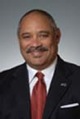 Edward G. Viltz is president and founder of the Internet Collaboration Coalition (Internet CC). InternetCC is a consulting company dedicated to assisting organizations expand their presence through the effective use of the Internet.
He has over 25 years of international executive management, consulting and entrepreneurial experience in the information technology marketplace.
He was the founding President of the Public Interest Registry (PIR), manager of the .ORG top level Internet domain, serving from 2002 through 2006. During that time PIR experienced phenomenal revenue growth from $1.9 million to over $32 million. In addition, .org domain names under management grew from 2.6 million to 5.3 million while attaining all budget and financial objectives. The .org domain is now growing at a greater percentage rate than both .com and .net.
He previously formed Technology Integration Solutions (TIS), an international consulting company, as a project management and business development firm focusing on setting up school-based Internet and technology partnerships between the United States and African countries. He was vice president and chief operations officer for Pulsar Data Systems. He also co-founded and served as president of Enterprise Integration Corporation (EIC) and held a variety of key management posts with the IBM Corporation.
During his IBM career, he helped develop multiple new business distribution and industry channels. In addition, he held several executive-level and management positions nationwide, and he was recognized for business management, revenue growth and human resources development. Most notable, he was a Loaned Executive from IBM to the small disadvantaged business community, and he developed a national network of technology companies owned by female and minority entrepreneurs.
Currently, he is on the board and is past chairman of Progressive Life Centers. He also is on the board of the School of Information Studies, Syracuse University; and Electronic Privacy Information Center (EPIC). Additionally, he served on former White House councils on small business and closing the digital divide. He is also a member of the Bulgarian President's IT Advisory Council and has consulted to governments, civil society organizations and corporations internationally.
He has a bachelor's degree from Southern University in New Orleans (SUNO) and has done graduate studies at Harvard University school of business and also holds a master's degree in organizational management from the University of Phoenix. In 1993, he was inducted into the Who's Who in Black America.
Paul Vixie, Chairman, CEO and cofounder, Farsight Security, Inc.
 Dr. Paul Vixie is an internet pioneer. Currently, he is the Chairman, CEO and cofounder of award-winning Farsight Security, Inc. Dr. Vixie was inducted into the internet Hall of Fame in 2014 for work related to DNS and anti-spam technologies. He is the author of open source internet software including BIND 8, and of many internet standards documents concerning DNS and DNSSEC. In addition, he founded the first commercial anti-spam company (MAPS, 1996), the first non-profit internet infrastructure software company (ISC, 1994), and the first neutral and commercial internet exchange (PAIX, 1991). In 2018, he cofounded SIE Europe UG, a breakthrough European data sharing collective to fight cybercrime. Dr. Vixie earned his Ph.D. from Keio University for work related to DNS and DNSSEC in 2010.
David Vladeck, Professor, Georgetown University Law Center
 Professor Vladeck teaches federal courts, civil procedure, administrative law, and seminars in First Amendment litigation, and co-directs the Institute for Public Representation, a clinical law program. Professor Vladeck recently returned to the Law Center after serving for nearly four years as the Director of the Federal Trade Commission's Bureau of Consumer Protection. At the FTC, he supervised the Bureau's more than 430 lawyers, investigators, paralegals and support staff in carrying out the Bureau's work to protect consumers from unfair, deceptive or fraudulent practices. Before joining the Law Center faculty full-time in 2002, Professor Vladeck spent over 25 years with Public Citizen Litigation Group, a nationally-prominent public interest law firm, handling and supervising complex litigation. He has briefed and argued a number of cases before the U.S. Supreme Court and more than sixty cases before federal courts of appeal and state courts of law resort. He is a Senior Fellow of the Administrative Conference of the United States, an elected member of the American Law Institute, and a scholar with the Center for Progressive Reform. Professor Vladeck frequently testifies before Congress and writes on administrative law, preemption, First Amendment, and access to justice issues.
Stephen Vladeck, Professor of Law, American University Washington College of Law
 Stephen I. Vladeck is a Professor of Law at American University Washington College of Law, and will join the faculty at the University of Texas School of Law in the same position in Fall 2016. His teaching and research focus on federal jurisdiction, constitutional law, and national security law. A nationally recognized expert on the role of the federal courts in the war on terrorism, Vladeck's prolific and widely cited scholarship has appeared in an array of legal publications-including the Harvard Law Review and the Yale Law Journal - and his popular writing has been published in forums ranging from the New York Times to BuzzFeed. Vladeck, who is a co-editor of Aspen Publishers' leading national security law and counterterrorism law casebooks, frequently represents parties or amici in litigation challenging government counterterrorism policies, and has authored reports on related topics for a wide range of organizations-including the First Amendment Center, the Constitution Project, and the ABA's Standing Committee on Law and National Security. A 2004 graduate of Yale Law School, Vladeck clerked for the Honorable Marsha S. Berzon on the U.S. Court of Appeals for the Ninth Circuit, and the Honorable Rosemary Barkett on the U.S. Court of Appeals for the Eleventh Circuit.
Ari Ezra Waldman, Professor of Law, New York Law School
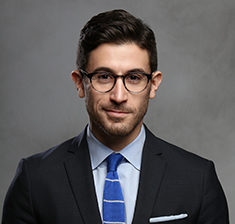 Ari Ezra Waldman is a Professor of Law and the Director of the Innovation Center for Law and Technology at NYLS. He is the Founder and Director of the Institute for CyberSafety, which includes the first-of-its-kind law school pro bono clinic representing victims of online harassment. He holds a Ph.D. from Columbia University, a J.D. from Harvard Law School, and a B.A. from Harvard College.
His research and writing focus on privacy, technology and society, hate and harassment on the Internet, and online social networks. His first book, Privacy As Trust: Information Law for an Information Age (Cambridge University Press, 2018), argues that privacy law should protect information disclosed in contexts of trust. Professor Waldman’s scholarship has been published in leading law reviews, including the Cornell Law Review Online, the Notre Dame Law Review Online, the Iowa Law Review, the Indiana Law Review, the Houston Law Review, the University of Miami Law Review, Hastings Law Journal, and the University of Maryland Law Review, to name a few.
James Waldo, Gordon McKay Professor of the Practice of Computer Science, Chief Technology Officer, Harvard University John A. Paulson School of Engineering and Applied Sciences
 Jim Waldo is the Chief Technology Officer for the John A. Paulson School of Engineering and Applied Sciences, where he is also a Gordon McKay Professor of the Practice of Computer Science, teaching courses in distributed systems and privacy. He also teaches technology policy at the Harvard Kennedy School. Jim has designed clouds at VMware, and was a Distinguished Engineer with Sun Microsystems Laboratories, where he investigated next-generation large-scale distributed systems. His last project at Sun Labs was Darkstar. Prior to (re)joining Sun Labs, he was the lead architect for Jini, a distributed programming system based on Java. Before joining Sun, Jim spent eight years at Apollo Computer and Hewlett Packard working in the areas of distributed object systems, user interfaces, class libraries, text and internationalization. While at HP, he led the design and development of the first Object Request Broker, and was instrumental in getting that technology incorporated into the first OMG CORBA specification. He is currently a member of the editorial boards of Queue magazine and the Communication of the ACM. He also holds over 50 patents. Jim received his Ph.D. in philosophy from the University of Massachusetts (Amherst). He also holds M.A. degrees in both linguistics and philosophy from the University of Utah.
Anne L. Washington, Assistant Professor of Data Policy, New York University
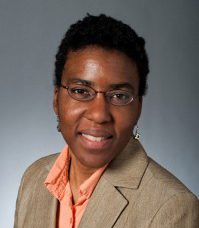 Anne L. Washington is an Assistant Professor of Data Policy at NYU. She applies her expertise in digital government to emerging data governance issues in organizations with a public mission. As a computer scientist trained in organizational ethnography, she unites inductive qualitative research methods with technology tools. She investigates the impact of information policy, business process, and organizational structures on the creation of digital records. At the broadest level, her multi-disciplinary work considers the impact of technology on society through the lens of digital record keeping. The National Science Foundation has funded her research multiple times including a five-year NSF CAREER grant on open government data. Her current interests include the development of professional norms for data scientists through socialization and management strategy.
She holds an undergraduate degree in computer science from Brown University, a graduate degree in Library & Information Science from Rutgers University, and a doctorate in Information Systems and Technology Management from The George Washington University. She developed her expertise on government data working at the Congressional Research Service within the Library of Congress. Before completing her PhD, she had extensive work experience in the private sector including the Claris Software division of Apple Computers and Barclays Global Investors. Previously, she was at the George Mason University’s School of Public Policy in Arlington, VA, where she served as one of the core faculty in the Organization Development and Knowledge Management Program. She was selected as a fellow at the Data & Society Research Institute of New York and the Peter Pribilla Foundation of Munich and Leipzig Germany. She also served as an invited expert to the W3C E-Government Interest Group and the W3C Government Linked Data Working Group. Her current appointment is in the Applied Statistics, Social Science, and Humanities department in the Steinhardt School of Culture, Education, and Human Development at New York University.
Chris Wolf, Hogan Lovells
 Christopher Wolf is a Senior Counsel at the law firm of Hogan Lovells US LLP, where he previously led the privacy and data security practice. He also is founder and chair of the Future of Privacy Forum.
Shoshana Zuboff, Charles Edward Wilson Professor of Business Administration (retired), Harvard Business School
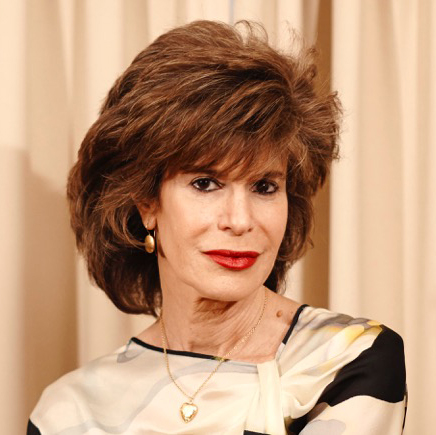 Shoshana Zuboff is an author and scholar whose new work, Master or Slave? The Fight for the Soul of Our Information Civilization (forthcoming, 2017), integrates her lifelong themes: the historical emergence of psychological individuality, the conditions for human development, the digital revolution, and the evolution of capitalism. She is a frequent contributor to the Frankfurter Allgemeine Zeitung where she writes at the intersection of capitalism and the digital. Zuboff is also the author of the seminal In the Age of Smart Machine: The Future of Work and Power and the influential The Support Economy: Why Corporations Are Failing Individuals and the Next Episode of Capitalism (with Jim Maxmin), along with many scholarly and popular articles.
Zuboff joined the Harvard Business School in 1981 where she became the Charles Edward Wilson Professor of Business Administration and one of the first tenured women on the HBS faculty. In 2014 and 2015 she was a Faculty Associate at the Berkman Center for Internet and Society at the Harvard Law School. She has been a featured columnist for Fast Company and for BusinessWeek Online.
EPIC Advisory Board - In Memoriam
John Anderson, (1922-2017)
 The Honorable John Anderson was a former United States presidential candidate who received 6 million votes as an Independent candidate in 1980. After his presidential candidacy, Mr. Anderson taught political science as a visiting professor at numerous universities, including Bryn Mawr College, Brandeis University, Stanford University, Oregon State University and the University of Illinois. He was a distinguished visiting professor at Nova Southeastern Law Center in Florida. Between 1960 and 1980, Mr. Anderson served ten consecutive terms as U.S. Representative to Congress from the 16th District of Illinois. He served as States Attorney in Winnebago County, Illinois for four years.
He served as President of the Center for Voting and Democracy, as well as President and CEO of the World Federalist Association. Mr. Anderson received an LL.M. degree from Harvard Law School in 1949, and was awarded honorary doctorates of law from Wheaton College and Trinity College.
Bill Coleman, (1947-2020)
 Bill Coleman had a history of leadership in the computing industry that spanned many decades. Bill graduated from the Air Force Academy with a degree in computer science in 1971. He went on to earn his master's degree in computer science and computer engineering from Stanford University. He also holds an honorary doctorate from the University of Colorado.
Beginning his Air Force career, Bill was chief of satellite operations in the Office of the Secretary. Upon leaving the Air Force, he joined VisiCorp where he was director of product development during development of the first spreadsheet, VisiCalc. At Sun Microsystems, he co-founded Sun Federal, founded Sun Professional Services; and lead development of the industry-leading Solaris Operating System. After his time at Sun, he became the co-founder and first CEO of BEA Systems, a leading infrastructure software development company.
Being generous in spirit and financially, Bill and his wife Claudia focused their philanthropy in the area of cognitive disabilities. They became founding donors of the Coleman Institute for Cognitive Disabilities at the University of Colorado.
Ian Kerr, 1968-2019, University of Ottowa Faculty of Law
 Ian Kerr holds the Canada Research Chair in Ethics, Law & Technology at the University of Ottawa, Faculty of Law, with cross appointments to the Faculty of Medicine, Department of Philosophy and School of Information Studies. Dr. Kerr has published books and articles on topics at the intersection of ethics, law and technology and is currently engaged in research on two broad themes: (i) Privacy and Surveillance; and (ii) Human-Machine Mergers. Building on his recent Oxford University Press book, Lessons from the Identity Trail, his ongoing privacy work focuses on the interplay between emerging public and private sector surveillance technologies, civil liberties and human rights. His more recent focus on robotics and implantable devices examines legal and ethical implications of emerging technologies in the health sector.
In the past five years, Dr. Kerr's research has attracted five million dollars in support from the Canada's Tri-Council, including recent funding for his work on artificial organs and medical enhancement devices. He is the co-director of the Canada Research Chair Laboratory in Law and Technology, a facility supporting the work of 40 researchers. His devotion to teaching has earned him six awards and citations, including the Bank of Nova Scotia Award of Excellence in Undergraduate Teaching, the University of Western Ontario, Faculty of Graduate Studies, Award of Teaching Excellence, and the University of Ottawa AEECLSS, Teaching Excellence Award. His innovative, interdisciplinary courses?Building Better Humans? and The Laws of Robotics?have garnered international attention, with regular invitations to lecture and teach at prestigious institutions across North America, Europe, the Middle East and Asia. Dr. Kerr sits on numerous editorial and advisory boards and is co-author of Managing the Law: The Legal Aspects of Doing Business, a business law text published by Prentice Hall and used by thousands of students each year at universities across Canada.
Robert Ellis Smith, (1940-2018)
 Robert Ellis Smith was a journalist who used his training as an attorney to report on the individual's right to privacy. From 1974 to the time of his death, he published Privacy Journal, a monthly newsletter on privacy in a computer age based in Providence, Rhode Island. Smith was the author of Ben Franklin's Web Site: Privacy and Curiosity from Plymouth Rock to the Internet (Spring 2000), the first and only published history of privacy in the U.S. He was also the author of Our Vanishing Privacy (1993), The Law of Privacy Explained (1993), Privacy: How to Protect What's Left of It; Workrights, a book describing individual rights in the work place; and The Big Brother Book of Lists. Privacy Journal also published Compilation of State and Federal Privacy Laws, Celebrities and Privacy, and War Stories, a collection of anecdotes on privacy invasions. Smith was asked to write the definitive statement on privacy in the last two editions of The World Book Encyclopedia. He appeared on all three network morning news programs, as well as "Face the Nation," "Nightline," and "All Things Considered." He was a regular commentator on "Marketplace" on American Public Radio.
Willis Ware, (1920-2013)
 Willis H. Ware (Ph.D., Princeton University, 1951) was a senior computer scientist emeritus with the RAND Corporation in Santa Monica, California. An electrical engineer, he devoted his career to all aspects of computer technology - hardware, software, architectures, software development, networks, federal agency and military applications, management of computer-intensive projects, public policy and legislation. In 1952 he joined Rand to help build the Johnniac computer, a machine weighing 2.5 tons and comprising 5,000 vacuum tubes. He chaired a Department of Defense committee in the late 1960s that created the first definitive discussion of information system security and treated it as both a technical matter and a policy issue. Later, in the early 1970s he chaired the cabinet-level HEW Committee, whose report was the foundation for the United States Federal Privacy Act of 1974.
Subsequently, President Gerald Ford appointed him to the Privacy Protection Study Commission, whose report remains the most extensive examination of private sector record-keeping practices. Most recently his interests turned to the vulnerabilities of highly automated and computerized information-oriented societies, and the technical and policy aspects of protecting their national information infrastructure.
Dr. Ware was the first and past chairman of the (U.S.) Information System and Privacy Advisory Board, which he chaired for eleven years following its creation. It is a statutory body created by the Computer Security Act of 1987 and advises the United States government on societal impacts of computer technology and broad aspects of the government's information system infrastructure. He also served as the Vice Chair of International Federation for Information Processing (IFIP) Technical Committee 11 from 1985-1994. At the time of his death, he was still serving as a member of the EPIC Advisory Board. EPIC presented Dr. Ware with the Champion of Freedom Lifetime Achievement Award in 2012.
EPIC Advisory Board - Emeritus
- Steven Aftergood, Federation of American Scientists
- Phil Agre
- David Banisar, Senior Legal Counsel, ARTICLE 19, Global Campaign for Free Expression
- Grayson Barber
- David Burnham, Co-founder and Co-director, Transactional Records Access Clearinghouse
- Ed Felten, Deputy U.S. Chief Technology Officer, White House
- Charles M. Firestone, Aspen Institute Communications and Society Program
- Robert Groves, Provost, Sociology Department, Georgetown University
- Pamela Jones Harbour, Senior Vice President, Global Member Compliance and Privacy, Herbalife
- Austin Hill, Co-founder and President, Zero-Knowledge Systems
- Aziz Huq, Professor, University of Chicago Law School
- Deborah Hurley, Harvard University/Brown University
- Pamela S. Karlan, Professor, Stanford Law School
- Pradeep Khosla, Chancellor, UC San Diego
- Rebecca MacKinnon, Director, Ranking Digital Rights, New America Foundation
- Eben Moglen, Executive Director, Software Freedom Law Center
- Eli Noam, Professor, Columbia University
- Cathy O'Neil, Author, Founder, ORCAA
- Chip Pitts, Lecturer in Law, EPIC Board Chair, Stanford Law School
- Anita Ramasastry, Professor, University of Washington Law School
- Jeffrey Rosen, Professor, George Washington University
- Frank Tuerkheimer, Habush-Bascom Professor of Law, University of Wisconsin Law School, Madison
- Tim Wu, Columbia Law School
Share this page:
Subscribe to the EPIC Alert
The EPIC Alert is a biweekly newsletter highlighting emerging privacy issues.